
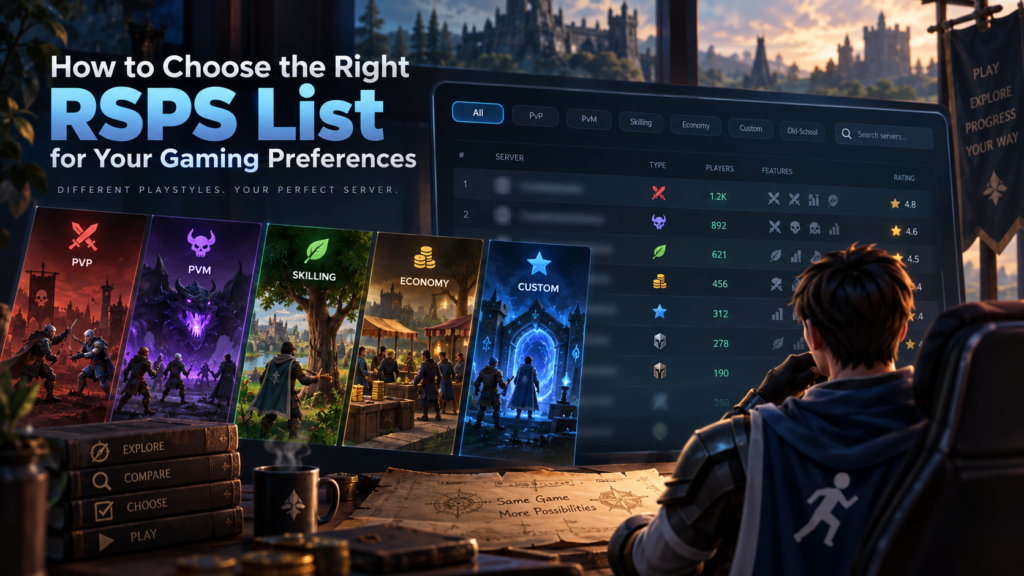
Finding a RuneScape private server sounds simple until you start comparing them. One focuses on PvP, another offers custom bosses and weapons, while a third tries to recreate an older RuneScape era almost exactly. After a few open tabs, the differences can become difficult to track.
If you want to narrow the options without testing every project yourself, take a few minutes to browse a trusted RSPS list and compare servers that match the way you actually play. A useful directory lets you understand the main differences before you download a client, join a Discord server, or spend hours building an account.
What Makes an RSPS List Useful?
A server directory should do more than place names in a ranking. Its real purpose is to help players understand what each project offers and whether it fits their gaming preferences.
RSPS stands for RuneScape Private Server. These are unofficial servers operated independently from the original game. Some stay close to familiar RuneScape mechanics, while others introduce custom progression systems, new weapons, bosses, game modes, faster experience rates, or completely new areas.
That variety makes comparison important.
What Information Should an RSPS List Include?
A useful RSPS server list should give players enough information to separate one type of experience from another without opening every server website first.
Some of the most useful details include:
- Main gameplay focus. A listing should make it clear whether a server focuses on PvP, PvM, skilling, economy, custom content, or a mix of several styles.
- RuneScape era or revision. Older remakes can feel very different from projects based on later versions, so this helps players find the type of gameplay they remember or prefer.
- Experience rates. Fast rates reduce the early grind, while slower rates make account progression and skill development more important.
- Client support. Desktop, RuneLite-style clients, mobile access, or browser support can affect how and where you play.
- Main content. Bosses, raids, minigames, Ironman modes, tournaments, quests, custom zones, and achievement systems can define the overall experience.
- Community activity. Player activity matters for trading, PvP, group bosses, clans, and events.
The longest description is not automatically the most useful one. What matters is whether the information helps you understand what kind of server you are looking at.
A simple comparison can make that clearer:
|
Your Preference |
What to Look For |
What May Matter Less |
|
PvP |
Active Wilderness, tournaments, quick gearing, combat events |
Long skilling grinds |
|
PvM |
Bosses, raids, gear progression, Slayer content |
Instant equipment access |
|
Skilling |
Complete skills, economy, achievements, slower progression |
Large PvP reward systems |
|
Old-School Gameplay |
Familiar interfaces, older revision, limited custom content |
Large amounts of custom gear |
|
Custom Gameplay |
New bosses, weapons, zones, upgrade systems |
Exact RuneScape recreation |
|
Mobile Play |
Android/iOS support, mobile client |
Desktop-only features |
|
Ironman |
Dedicated modes, collection logs, solo progression |
Player trading |
A good list should also make current information easy to spot. If descriptions are vague, outdated, or almost identical, the directory becomes less useful.
How to Tell Whether the List Is Worth Using
Not every directory gives players the same level of detail. Some make comparison easy. Others provide little more than server names and promotional claims. A strong RSPS list should help you answer practical questions without forcing you to open every website.
Look for these signs:
- Clear server positioning. You should be able to tell whether a project is aimed at PvP players, bossing fans, skillers, collectors, Ironman players, or people looking for nostalgia.
- Specific feature descriptions. “Unique gameplay” says very little. Mentions of raids, custom bosses, mobile support, RuneLite, Ironman, or a specific progression system are much more useful.
- Useful progression details. Terms such as high-rate, economy, spawn, or custom can quickly show how fast the server is likely to feel.
- Current information. Active private servers change over time, so descriptions should reflect the project players can actually join now.
- Easy comparison. If every listing sounds almost identical, the directory is not helping you narrow your options.
How Much Weight Should You Give Rankings?
Rankings are useful for discovery, but they should not make the final decision for you. When reading rankings, compare several things at once:
- Position. A higher ranking may indicate visibility or community support.
- Description. This should explain what actually separates one server from another.
- Activity. A regularly maintained project may be more appealing than one relying on an older reputation.
- Gameplay focus. PvP, PvM, custom content, and economy gameplay attract different players.
- Access. Mobile, desktop, and client options can immediately remove some choices from your shortlist.
Match the RSPS Server List to Your Playstyle
Before comparing servers in detail, decide what you actually want to do after logging in.
Someone looking for fast PvP has very different priorities from a player who wants to spend weeks developing one account. The same applies to someone interested in bossing, trading, skilling, collecting rare drops, or experimenting with custom gear.
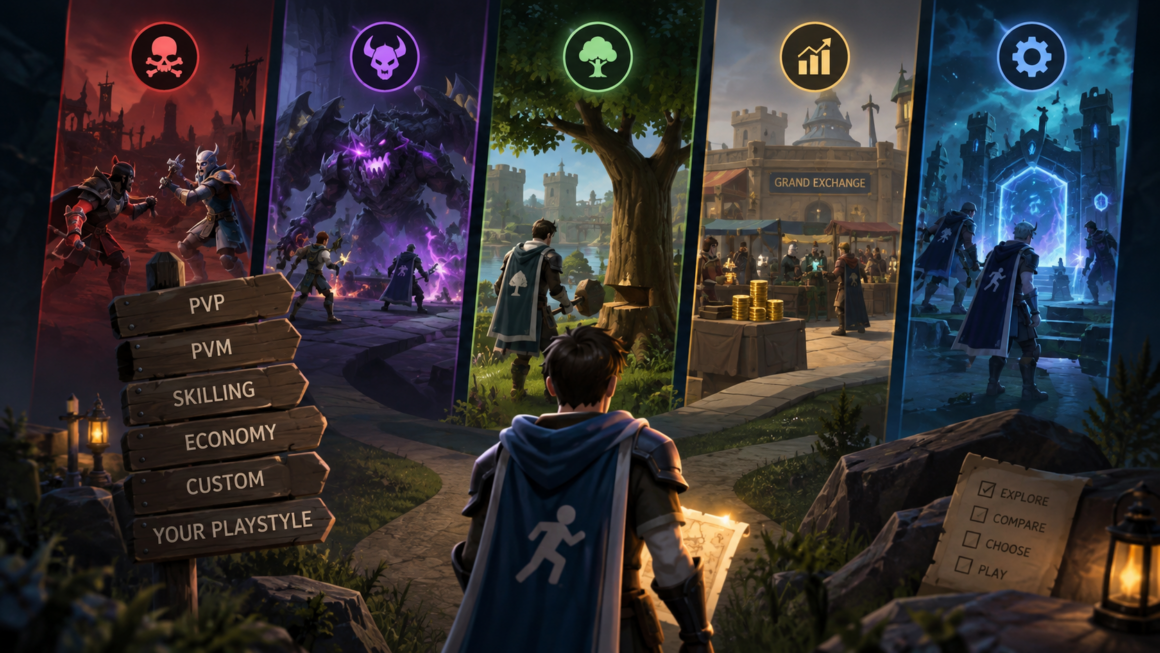
Start with a few basic questions:
- Do you prefer PvP, PvM, skilling, or a mix?
- Do you want fast progression or a longer grind?
- Do you prefer familiar RuneScape content or custom features?
- Will you mainly play alone or with other people?
- Does trading and the in-game economy matter to you?
- Do you need mobile access, or will you only play on desktop?
- Do you prefer short sessions or long-term account progression?
- Are you interested in seasonal content, achievements, or competitive rankings?
These answers make an RSPS server list much easier to use.
Choose a Server Type That Fits Your Favorite Content
Most private servers combine several activities, but they usually have one area that receives more attention.
PvP Servers
PvP-focused projects are built for players who want combat quickly. They may provide easier access to equipment, active Wilderness areas, tournaments, preset gear, bounty systems, or regular events.
When comparing PvP options, look for:
- Active combat areas. PvP depends on other players, so activity matters more than the number of zones listed.
- Fast access to gear. Competitive players often want to spend less time preparing and more time fighting.
- Events and tournaments. Scheduled competition can keep PvP active beyond random Wilderness encounters.
- Balanced equipment. If one setup dominates too easily, combat may become repetitive.
- Useful rewards. PvP rewards give players a reason to keep competing beyond individual fights.
PvM Servers
PvM servers usually put more attention on bosses, raids, Slayer, gear progression, collection logs, pets, and achievements.
Players interested in PvM should look for:
- Several progression stages. Early, mid-game, and end-game content make progression feel more complete.
- Useful gear upgrades. New equipment should give players a reason to continue bossing.
- Solo and group options. Some players prefer solo encounters, while others want raids or clan content.
- Different boss mechanics. Variety is more interesting than simply increasing enemy health and damage.
- Repeatable goals. Collection logs, pets, achievements, and rare drops can extend the life of PvM content.
If the strongest gear becomes available too quickly, a PvM-focused project may feel finished sooner than expected.
Economy Servers
Economy-based projects make drops, resources, trading, and money more important.
They often appeal to players who prefer gradually improving an account instead of rushing directly to end-game content.
Useful signs include:
- Slower progression. Levels and upgrades take more time.
- Active trading. A functioning economy gives items importance beyond their combat stats.
- Resource demand. Skilling materials and drops should remain useful.
- Meaningful rarity. Harder-to-obtain items can create longer-term goals.
- Money sinks. Systems that remove currency or items can help prevent the economy from becoming overloaded.
Lower experience rates or harder drops are not automatically disadvantages here. For some players, they are exactly what makes the server interesting.
Spawn Servers
Spawn servers remove much of the preparation. Players can often obtain stats or equipment quickly and move directly into combat or other activities.
They can work well for players who want:
- Quick PvP access
- Shorter setup time
- Easy build testing
- Less focus on skilling
- Less emphasis on money-making
- Faster access to higher-level content
If grinding is the part of RuneScape you would rather skip, this type of server may be a better fit than a traditional economy project.
Custom Servers
Custom projects are usually harder to judge from the name alone.
They may introduce original equipment, bosses, pets, zones, currencies, upgrade systems, and unusual progression paths. Some still feel close to RuneScape. Others use the familiar game as a base for something much more experimental.
When comparing custom projects on an RSPS list, descriptions matter more than the raw number of features.
Look for details about:
- Custom equipment. Does it fit RuneScape-style progression, or does it completely change combat?
- Original bosses. New encounters are more interesting when they introduce mechanics instead of simply adding more health.
- Upgrade systems. Some servers build progression around improving weapons or armor rather than finding standard RuneScape gear.
- New zones. Custom areas can make exploration feel different from the official game.
- Additional currencies. These may control access to shops, rewards, upgrades, or special events.
- Progression logic. A large amount of custom content is easier to enjoy when players understand what to unlock next.
Old-School and Remake Servers
Some players are not looking for new systems at all. They want a particular RuneScape era back.
A remake server may focus on older graphics, interfaces, combat mechanics, quests, and progression.
Players looking for nostalgia should compare:
- Combat mechanics
- Interface style
- Available quests
- Skill systems
- Item availability
- Experience rates
- Modern features added to the original base
Two servers can both describe themselves as old-school and still provide noticeably different experiences.
Compare Progression and Economy Before You Join
Two servers can advertise similar bosses and skills but feel completely different because of their progression speed. If strong gear appears frequently, players move through equipment tiers faster. Harder drops create a longer progression path and require more time.
Before choosing, compare:
- XP rates. These affect how quickly skills and combat levels develop.
- Drop rates. Rare drops can create long-term goals but may also slow progression.
- Starter gear. Generous starter equipment can reduce the early grind.
- Money-making methods. These influence how quickly players can participate in the economy.
- Boss requirements. Some servers open high-level content early, while others require longer preparation.
- Prestige systems. These can create additional progression after reaching max levels.
Think about how often you actually play.
Someone logging in for an hour after work may prefer faster progression. A player looking for one account to develop over several months may enjoy something slower.
Check Activity, Client Support, and Community
A feature-heavy server can still feel empty if the project is inactive.
Recent announcements, updates, events, and community discussions tell you more than an impressive description written years ago.
Look for:
- Recent patch notes. These suggest that the project is still maintained.
- Regular events. PvP competitions, boss events, seasonal activities, or community challenges can keep the game active.
- Developer communication. Clear announcements make upcoming changes easier to follow.
- Community discussions. Active channels can show what players are currently doing.
- Visible bug fixes. Frequent fixes can be just as important as major content releases.
At this stage, an RSPS server list should help you compare more than gameplay features alone. It should make it easier to see whether a project is active, accessible on your device, and suitable for the amount of time you want to invest.
How to Build a Shortlist Without Wasting Time
Once you understand your preferred playstyle, there is little reason to compare twenty servers in detail. Three or four strong candidates are usually enough.
Check Onboarding and Monetization
A project may have dozens of systems, but more features do not automatically create a better experience.
If a server has custom currencies, upgrade tiers, prestige systems, several shops, and original bosses, new players need a clear way to understand how those systems connect. You do not need to reject every server with paid features. You simply need to know whether its monetization fits the kind of experience you want.
Watch for Red Flags Before Downloading
A few warning signs are worth noticing before you invest much time. They do not automatically mean a server is bad, but they should encourage a closer look.
- Very old descriptions. Features may no longer reflect the current version of the server.
- No visible updates. A quiet website and inactive community can suggest limited maintenance.
- Unclear progression. If you cannot tell what players are supposed to work toward, the early game may feel confusing.
- Too many generic claims. Phrases such as “best PvP” or “unique gameplay” mean little without specific details.
- Missing client information. If mobile or a specific desktop client matters to you, support should be easy to confirm.
- Heavy paid advantages. Players who care about competitive progression may want to check how purchases affect gear, XP, or the economy.
- Confusing onboarding. A server with many systems but no clear starting point may become frustrating quickly.
- Inactive community spaces. Empty discussion channels can be a warning sign for players who depend on trading, PvP, or group content.
Compare Your Final Options Side by Side
Once you have a shortlist, compare the remaining servers directly instead of trying to remember every detail.
A simple table can help:
|
Check |
Server A |
Server B |
Server C |
|
Main Focus |
PvP |
PvM |
Old-School Economy |
|
Progression |
Very Fast |
Medium |
Slow |
|
Custom Content |
Some |
High |
Minimal |
|
Mobile Support |
Yes |
Yes |
No |
|
Ironman |
No |
Yes |
Yes |
|
Economy |
Limited |
Moderate |
Important |
|
Group Content |
Low |
High |
Medium |
|
Update Activity |
Frequent |
Regular |
Moderate |
|
Likely Fit |
Quick Combat |
Boss Progression |
Long-Term Account Building |
This kind of comparison often removes at least one option immediately.
Final Takeaway
The right RSPS list should make comparison easier, not give you another long page of server names to sort through.
Look for a directory that provides clear descriptions, useful gameplay details, current information, and enough variety to compare different server types. The best result is not necessarily the most popular server. It is the one that gives you the type of RuneScape experience you actually want to keep playing.
FAQ About Choosing an RSPS List
What Is an RSPS List?
An RSPS list is a directory of RuneScape Private Servers. It allows players to browse different projects and compare descriptions, rankings, gameplay styles, and other available information before choosing where to play.
What Should I Look for on an RSPS Server List?
Start with details that directly affect your experience: server type, progression speed, PvP or PvM focus, custom content, client support, community activity, and major game modes. Clear descriptions are usually more useful than rankings alone.
Should I Always Choose the Highest-Ranked RSPS?
Not necessarily. Rankings can help you discover active or popular servers, but they do not tell you whether the gameplay matches your preferences. A lower-ranked PvM or economy server may fit you better than a highly ranked PvP project.
Are Custom RSPS Servers Better Than Old-School Servers?
They offer different experiences rather than one being automatically better. Custom servers may introduce new weapons, bosses, zones, currencies, or progression systems. Old-school and remake servers usually focus more on familiar RuneScape mechanics and nostalgia.
How Can I Tell if an RSPS Is Still Active?
Look for recent updates, patch notes, events, community discussions, and developer announcements. An active Discord server or regularly updated website can also help show whether the project is still being maintained.
More Stories
AI-Generated Mob Behavior Is Coming to Minecraft-Style Games: Should We Be Worried?
ThePlayCentre Bukipcutoqik Digital String: What It Is And How To Use It In 2026
The Play Centre 2026: Your Complete Guide To Programs, Play Spaces, And Joining Tips