
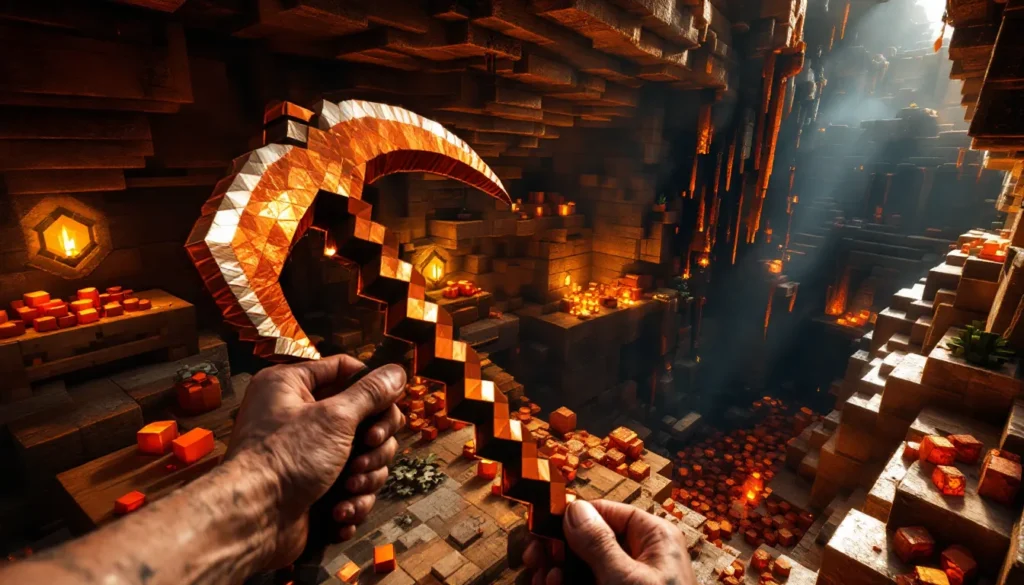
Copper tools might not be the first thing new Minecraft players reach for, but they’ve carved out a legitimate place in the game since their introduction in the Caves & Cliffs update. Unlike iron or diamond, copper sits in an interesting middle ground: it’s easier to obtain than iron tools early on, yet more situational than the reliable stone alternative. Whether you’re optimizing resource gathering on a fresh world or building an elaborate mining operation, understanding when and how to use copper tools makes a real difference in your efficiency. This guide covers everything from mining copper ore to mastering the oxidation mechanics that make copper unique in Minecraft’s toolkit.
Key Takeaways
- Copper tools bridge the gap between stone and iron, offering a 13% speed boost over stone with 332 durability—ideal for early survival before accessing iron farming.
- Copper ore spawns between Y-level -16 and 112 (peak at Y-level 48) in dripstone caves, requiring at least a stone pickaxe to harvest and smelt into ingots.
- Copper tools undergo a four-stage oxidation cycle (natural, exposed, weathered, oxidized) that is purely cosmetic and can be reversed or paused by storing tools in containers.
- While copper tools don’t outperform iron or netherite statistically, they excel as decorative pieces and status symbols, with oxidized copper creating environmental storytelling in creative builds.
- Enchanting copper tools with Efficiency and Unbreaking III maximizes their value in early survival, making them a cost-effective upgrade without requiring significant resource investment.
What Are Copper Tools In Minecraft?
Copper tools are a tier of equipment introduced in Minecraft 1.17 (Caves & Cliffs Part I). They represent the middle ground between stone and iron, better than stone in almost every measurable way, yet require a different resource investment than iron tools. Players craft them from copper ingots, and they come in the standard five varieties: pickaxe, axe, shovel, sword, and hoe.
What sets copper tools apart is their visual evolution. Unlike other tools that stay static, copper tools oxidize over time, changing color and appearance as they age. They start as shiny, natural copper, then gradually shift through exposed copper, weathered copper, and eventually oxidized copper (the teal/turquoise stage). This isn’t just cosmetic, it’s a core mechanic that defines how many players interact with copper equipment throughout their gameplay.
In terms of raw performance, copper tools occupy a sweet spot. They’re faster than stone but slower than iron, with durability that falls between the two. For players still establishing resource chains, copper tools provide immediate value without the iron-heavy requirements of more endgame equipment. They’re also the only tool type that works with Minecraft’s full oxidation system, making them interesting for decorative and functional builds.
How To Find And Mine Copper Ore
Mining Levels And Efficiency
Copper ore generates between Y-level -16 and Y-level 112, with the highest concentration around Y-level 48. You’ll encounter it regularly while caving or strip mining, especially in the newer cave biomes. The key detail: copper ore requires a stone pickaxe minimum to harvest. Wooden or bone pickaxes won’t drop anything, so make sure you’re carrying at least stone-tier equipment before attempting to mine copper.
The actual mining speed depends on your pickaxe material. A stone pickaxe takes about 0.75 seconds, while an iron pickaxe cuts that to 0.4 seconds. If you’re planning a bulk copper mining session, upgrading to iron before starting saves significant time. Each copper ore block drops one raw copper, so the harvest rate is straightforward, no multipliers or variance like you’d see with diamonds or other ores.
Best Locations For Copper Ore
Copper ore spawns most densely in dripstone caves and copper-rich cave clusters. If you’re exploring a fresh world, head toward deeper cave networks after breaking through Y-level 0. The new cave generation introduced in 1.18+ creates sprawling underground systems where copper is abundant and easy to spot (the orange-brown color stands out against stone).
For efficient mining, combine copper gathering with your iron and coal runs. Since copper spawns higher than deeper ores like diamonds or ancient debris, you’ll often hit significant copper deposits while exploring for other resources. Some players deliberately seek out dripstone caves early because the dense vegetation and varied cave types concentrate multiple ore types in smaller areas, making copper collection a natural byproduct of general mining operations.
Crafting Copper Tools: A Step-By-Step Guide
Creating Copper Ingots
Raw copper doesn’t turn into ingots automatically. You need to smelt raw copper in a furnace or blast furnace using any fuel source (coal, charcoal, wood, etc.). One raw copper block produces one copper ingot, straightforward conversion with no waste. A furnace takes about 10 seconds per raw copper, while a blast furnace cuts that to 5 seconds, making it worth setting up if you’re processing large quantities.
If you’ve collected a full inventory of raw copper (64 stacks if you really went deep), batch smelting in multiple furnaces saves time. Throw all your raw copper into one furnace and let it work while you mine more resources. The copper ingot is your crafting material for everything copper-related, tools, decorative blocks, and more.
Crafting Recipes For Each Tool
All copper tools follow the standard Minecraft crafting patterns:
- Copper Pickaxe: 3 copper ingots on top, 2 sticks in an inverted T shape = 1 pickaxe
- Copper Axe: 3 copper ingots in an L-shape, 2 sticks = 1 axe
- Copper Sword: 2 copper ingots stacked vertically, 1 stick below = 1 sword
- Copper Shovel: 1 copper ingot on top, 2 sticks below in an inverted T = 1 shovel
- Copper Hoe: 2 copper ingots on top row, 2 sticks to the side = 1 hoe
You can craft all of these at a standard crafting table. There’s no special recipe or workbench required. For most players, copper pickaxes are the primary goal, they’re fast enough for early-stage ore mining and durable enough to last through multiple caving expeditions. The sword sees occasional use in early survival, though most players transition to iron before engaging serious combat.
Copper Tool Durability And Performance Stats
Durability Comparison With Other Materials
Copper tools have 332 durability, falling cleanly between stone (131 durability) and iron (250 durability). In practical terms, a copper pickaxe will last roughly 2.5 times longer than a stone pickaxe before breaking. For iron, copper lasts about 25% longer, which matters if you’re stretching resources early in survival mode.
Durability decay follows standard Minecraft mechanics: each block mined, each hit dealt, or each block broken consumes one durability point. Efficiency enchantments don’t reduce durability consumption, they just speed up mining, making the tool last proportionally longer in real time. Unbreaking enchantments multiply durability (Unbreaking III can roughly triple the lifespan), making them valuable early investments even on copper gear.
Mining Speed And Effectiveness
Copper pickaxes have a mining speed of 6.5, compared to stone’s 5 and iron’s 8.5. That difference translates to roughly 13% faster mining than stone, but about 24% slower than iron. For stone blocks, dirt, gravel, and copper ore itself, this speed difference is noticeable. A copper pickaxe clears through a gravel column faster than stone but slower than iron, useful context when deciding whether to craft copper gear or wait for iron.
The real value of copper tools appears in early-stage mining before iron becomes accessible. In a fresh survival world, you’ll gather stone quickly, but crafting stone tools immediately leaves you with the task of mining iron ore (which requires stone tools). Copper tools bridge this gap elegantly: gather some raw copper from cave exploration, smelt it, and suddenly you have faster stone-tier equipment without committing to a full iron farming operation.
Copper Tools Vs. Other Minecraft Tools
When To Use Copper Over Iron And Stone
Copper tools make the most sense in two specific scenarios. First, early survival when you’ve discovered copper ore but haven’t established iron farming yet. They’re faster than stone and require significantly less setup than iron, giving you a legitimate performance upgrade for minimal resource investment.
Second, copper shines when you need decorative equipment. Because copper oxidizes and changes color over time, building with copper tools creates visual progression and character development in your base. Some builders deliberately oxidize copper pickaxes and display them as trophies, they’re functional equipment that also communicates how long you’ve been working in that world.
Compare this directly to iron: iron tools are more durable (250 vs 332), faster overall, and don’t degrade visually, making them superior for pure mining efficiency. Diamond and netherite tools are even faster and more durable, eliminating any scenario where copper outperforms them on stats alone. The practical hierarchy is simple: stone < copper < iron < diamond < netherite in terms of raw performance.
That said, copper isn’t “bad.” It’s situational. Speed-runners and min-maxed survival players skip copper entirely, jumping from stone to iron as fast as iron ore spawns. Casual players and builders often craft copper tools because they’re fun, look interesting as they oxidize, and represent a milestone in world progression. The game doesn’t require copper tools to progress, but they make early-mid game more diverse and engaging than stone-to-iron alone.
Oxidation And Weathering Mechanics
Understanding Copper Oxidation Stages
Copper tools and copper blocks follow a four-stage oxidation cycle that plays out over real time. The stages are:
- Copper (fresh, natural copper color, orange/brown)
- Exposed Copper (starts showing weathering, slightly lighter)
- Weathered Copper (darker, aged appearance)
- Oxidized Copper (teal/turquoise, fully oxidized)
Each stage lasts a random interval (typically 5-20 in-game days), so a single copper tool might spend weeks in exposed copper before advancing. The oxidation is purely visual, your copper pickaxe mines at the exact same speed in all stages. Durability also doesn’t change. This means oxidation is cosmetic only, not a mechanical degradation. Some players love this progression: others find it irrelevant for pure gameplay.
One important detail: oxidation happens only when the tool is held in your inventory, not when stored in a chest or container. This is a crucial mechanic for players who want to keep copper tools at a specific oxidation stage. Store your tools in a chest to freeze their appearance indefinitely.
How To Prevent Or Reverse Oxidation
If you want to reset a copper tool back to natural copper, use an axe on the oxidized copper tool. Yes, you read that right, hitting an oxidized copper tool with any axe (wooden, stone, iron, diamond, netherite, or even another copper axe) removes one oxidation stage. You can reverse all the way back to natural copper by repeatedly hitting it.
This mechanic means you can maintain copper tools at any oxidation stage indefinitely. Want a weathered copper pickaxe for aesthetic reasons? Advance it to that stage, then hit it with an axe once every time it progresses further. This creates interesting roleplay possibilities and visual storytelling in Minecraft builds, your main tool can reflect your world’s age without affecting gameplay.
Alternatively, if oxidation bothers you, simply store copper tools in containers rather than keeping them in your inventory. The tools won’t oxidize while stored, preserving their original appearance indefinitely. No upkeep required.
Practical Uses And Building Applications
Tools For Specific Mining Tasks
Copper tools excel at specific mining scenarios even though their position in the performance hierarchy. When clearing large volumes of stone, gravel, or copper ore itself, the speed boost over stone tools reduces fatigue in ways that stats alone don’t capture. Mining through 30 blocks of gravel with copper is visibly faster than stone.
For players doing construction or terraforming, copper shovels handle dirt, grass, and sand efficiently. They’re faster than stone but use less durability than committing a full iron shovel to basic block removal. Similarly, copper axes work well for early-game wood farming before you’ve established an iron-rich playstyle.
The caveat: none of these tasks require copper tools specifically. You can use them and benefit marginally, but iron or diamond tools would be objectively better if you have the resources. Copper fills the “good enough” niche when you’re not ready to upgrade.
Creative And Aesthetic Uses
Here’s where copper tools become genuinely interesting. Builders use oxidized copper tools as decorative items, display pieces, and status symbols in bases. Crafting a pickaxe, letting it oxidize through all four stages while on display, then preserving it as a world monument is a form of environmental storytelling. The tool visually communicates “I’ve been working in this world for a long time.”
Some servers and communities host “copper tool challenges” where players see who can complete difficult mining tasks using only copper gear, treating it as a self-imposed difficulty modifier. Creative mode builders sometimes use copper tools in item frames as aesthetic elements, leveraging their unique colors to complement build themes.
You can also incorporate copper blocks (crafted from nine copper ingots) alongside tools for cohesive builds. Copper doors, trapdoors, and decorative blocks all oxidize in sync with your tools, creating a unified aesthetic that ages naturally over time. This interconnected system makes copper compelling for players who care about world atmosphere and visual progression beyond pure mechanical efficiency. game modding communities for custom texture packs that enhance copper’s visual identity even further.
Pro Tips For Maximizing Copper Tool Efficiency
Enchanting copper tools with Efficiency and Unbreaking should be your priority if you’re committing to them. Even basic levels of Efficiency (II-III) noticeably speed up mining, and Unbreaking III extends durability significantly. Since copper tools are relatively cheap to craft, enchanting them is less resource-intensive than enchanting iron gear.
If you’re bulk mining copper ore for ingots, combine your mining runs with other resource gathering. You’ll hit copper regularly while seeking iron, diamonds, or exploring caves for materials. Don’t make dedicated copper-only mining expeditions, integrate copper gathering into your natural mining patterns.
Store completed copper tools in containers rather than carrying them in your inventory during early survival. This prevents unintended oxidation while you’re focused on other tasks. When you actually need copper tools, pull them out and use them intentionally rather than letting them waste away in your hotbar.
For maximum resource efficiency, skip copper entirely if you’re speedrunning or playing competitively. The time spent smelting copper ingots is time not spent gathering iron or establishing farming infrastructure. But, if you’re playing casually or building creatively, crafting a single copper pickaxe early in the game provides a meaningful performance upgrade that makes the next mining session more enjoyable without requiring significant commitment.
Consider checking out detailed mining guides for optimized Y-level strategies and ore distribution data. Mining patterns have shifted with Minecraft versions, and updated guides reflect the current cave generation and ore spawning mechanics.
Finally, experiment with oxidized copper purely for aesthetic value. Advanced players often stage displays where copper tools oxidize at different rates, creating visual collections that represent different eras of their world. It’s a form of environmental storytelling that costs nothing mechanically but adds personality to your base.
Conclusion
Copper tools occupy a unique position in Minecraft’s equipment hierarchy, not essential, not meta-defining, but genuinely useful in the right context. They bridge the gap between stone and iron in early survival, offer interesting oxidation mechanics for builders, and provide a visual representation of world progression that few other items can match.
The practical advice is simple: craft copper tools when you encounter raw copper during early mining runs, use them until you secure iron, then transition to iron and beyond. Don’t stress about maximizing copper tool gameplay. They’re a natural waypoint in progression, not a core mechanic.
For players interested in deeper Minecraft systems, copper represents the game’s willingness to create equipment that’s situational rather than purely hierarchical. Not everything needs to be objectively better, sometimes the most interesting tools are the ones that tell a story as they age. Use copper tools, watch them oxidize, and let your playstyle determine whether they matter to your individual survival experience.
More Stories
Minecraft: The World Of Gaming Madness At ThePlayCentre — Your 2026 Guide
Inside ThePlayCentre Minecraft Archives: A 2026 Guide To Maps, Builds, And Community History
Bane Of Arthropods In Minecraft: Master The Enchantment In 2026 (ThePlayCentre Guide)