
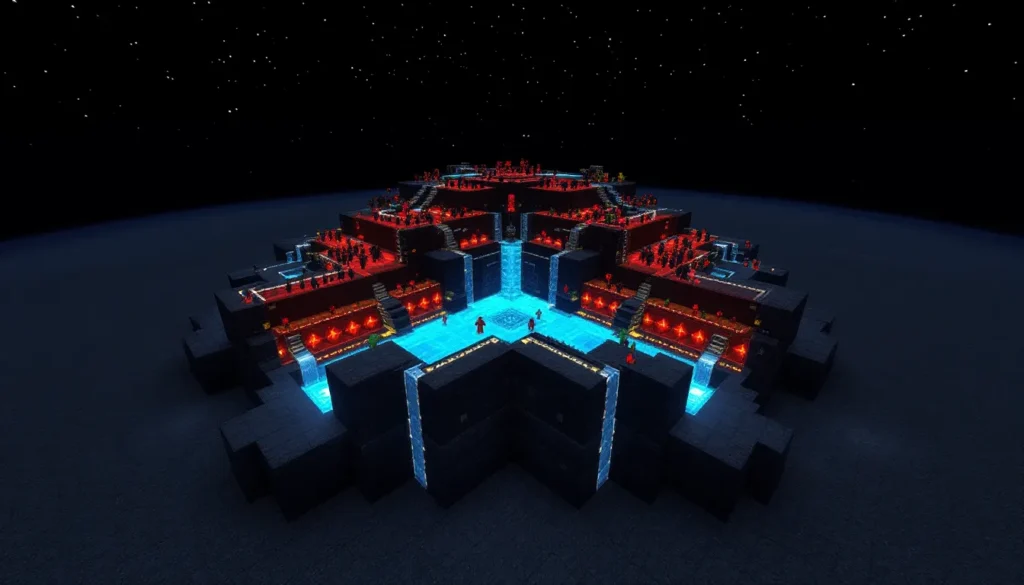
Mob farms are the backbone of efficient Minecraft progression, whether you’re grinding for XP, collecting drops like gunpowder or bones, or building towards that first Netherite set. If you’re still manually hunting mobs in the dark, you’re leaving resources on the table. A properly constructed mob farm turns spawning mechanics into a passive income stream, and unlike many Minecraft projects, the payoff is immediate and tangible. This guide walks you through everything from site selection to optimizing spawn rates, covering both vanilla mechanics and practical tweaks that make the difference between a farm that trickles resources and one that floods them.
Key Takeaways
- A well-designed mob farm in Minecraft automates resource collection 24/7, producing 100-200 drops per minute when actively farmed and 20-40 per minute passively while AFK.
- Choose your mob farm location based on isolation from cave systems and light sources rather than altitude alone—post-1.18, building far from caves in any direction outperforms sky-based farms.
- Start with a simple 32×32 single-level mob farm, then scale to multi-level designs and perimeter farms as you progress, balancing efficiency gains against redstone complexity and material costs.
- Light is the primary spawn suppressor; even a single torch reduces spawns by 50%, so cover your farming platform with a dark roof and isolate the farm from nearby light sources.
- Suffocation damage via redstone pistons kills mobs fastest and most reliably, but fall damage or lava mechanisms work for beginner-friendly mob farms without requiring redstone knowledge.
What Is A Mob Farm And Why You Need One
A mob farm is an automated structure that exploits Minecraft‘s spawn mechanics to concentrate hostile mobs in a controlled area, then kills them for drops and experience. Unlike manual grinding, a functioning farm works 24/7 as long as the chunk is loaded, meaning you can AFK (away from keyboard) for an hour and return to thousands of points of experience and stacks of loot.
The core appeal is efficiency. A basic farm produces resources at a rate that would take hours of manual grinding in minutes. Drop rates vary by farm type and mob, but a well-built farm handling zombies and skeletons yields roughly 100-200 drops per minute when actively farmed, or 20-40 per minute passively while you handle other tasks.
Mob farms fall into several categories: overworld farms target common mobs (zombies, skeletons, creepers, spiders) and work anywhere at Y-level 0-128 (post-1.18 Caves & Cliffs update). Nether farms focus on Piglins, Magma Cubes, and Wither Skeletons, higher risk, higher reward. End farms specialize in Enderman and are endgame content. For new players, an overworld farm is the entry point: experienced builders often maintain multiple farm types.
Why build one? Early game, mobs drop string, bones, gunpowder, and rotten flesh, all renewable resources that would otherwise require dangerous nighttime hunting. Mid-game players use farms to stack XP for enchanting and anvil repairs. Late-game builders leverage them as resource pipelines for mega-builds. In survival mode on any difficulty above peaceful, a mob farm isn’t just convenient, it’s the difference between sustainable progression and constant material shortages.
For those diving deep into building, Minecraft Automatic Farms: Your Guide to Effortless Crop Production covers crop automation concepts that often pair well with mob farm setups.
Essential Materials And Tools For Mob Farm Construction
Basic Gathering Requirements
Before breaking ground, gather these essentials:
- Water buckets (at least 2-3): Critical for funneling and direction changes.
- Building blocks (stacks of dirt, stone, or your preferred aesthetic): Forms the structure itself.
- Slabs or stairs: Used to control spawning surfaces, mobs can’t spawn on slabs at half-height.
- Signs or leaves: Redirect water flow and prevent mobs from escaping certain areas.
- Trapdoors: Fine-tune water flow direction and create one-way pathways.
- Hoppers and chests: Funnel and store drops (1-2 hoppers minimum, though larger farms use 4-8).
- Damage blocks: Fall damage (typically 21-24 blocks for ~90% health reduction) or suffocation via pistons.
- Repeaters and comparators (if automating): Control powered circuits for piston traps or lighting logic.
You can start with stone-tier tools (stone pickaxe minimum) to gather these, but having iron tools speeds collection significantly. No mods or commands required, this is pure vanilla.
Optional But Recommended Items
- Spawners (if you find a dungeon): Accelerate spawn rates dramatically, though they’re rarer than building a farm from scratch.
- Scaffolding: Speeds up vertical construction and is easy to remove afterward.
- Naming tags: Prevent farm mobs from despawning if you need to pause testing (useful for troubleshooting).
- Daylight sensors and redstone: Automate farm mechanics or add aesthetic lighting that doubles as spawn control.
- Carpet or dark concrete: Hide the farming floor from view, improving spawn rates by eliminating competition from surface spawns.
- End rods or amethyst blocks (decorative): Don’t affect function, but justify the effort if you’re building in a shared multiplayer realm.
Don’t overthink this phase. The goal is gathering enough materials to build the core structure. You can always optimize later with redstone or aesthetic upgrades.
Choosing The Right Location And Design
Best Locations For Mob Farm Placement
Location determines spawn rate and efficiency before you place a single block. Here’s what matters:
Height and Y-level: In 1.18+, mobs spawn at Y-levels 0-128 (the entire valid range after Caves & Cliffs). Caves generate naturally throughout this range, meaning spawning competition is everywhere. The traditional strategy, building high in the sky at Y-level 200+, no longer guarantees spawn monopoly. Instead, focus on isolation: build far from surface caves (caves don’t generate above Y-128, so anything above that height in 1.18+ has zero cave competition).
Horizontal distance: Mobs only spawn if no player is within 24 blocks of the spawn point and despawn if players exceed 128 blocks away. For active farming, you’ll stand ~30-50 blocks away. For AFK farming, you’ll position yourself 50-80 blocks from the spawn platform, ensuring spawns continue while you’re elsewhere.
Biome: Any biome works for overworld mobs, but avoid mushroom fields (no hostile mobs spawn there). Nether farms require Nether presence. Some builders prefer forest or mountain biomes purely for aesthetics, the biome itself doesn’t impact spawn rates directly, but dense caves nearby do.
Isolation over altitude: A mob farm surrounded by 128 blocks of empty space in any direction outperforms a sky farm next to ravines or cave systems. If you’re in a multiplayer world, place farms far from main bases and common travel routes.
Popular Farm Designs And Their Benefits
The Classic Stack Design (beginner-friendly)
- A 2×2 chunk (32×32 block area) spawning platform with mob-collection shafts below.
- Spawning platforms built 10-12 blocks apart vertically, stacked 4-8 levels high.
- Mobs walk/jump toward the center and fall through a central shaft into a damage mechanism.
- Pros: Simple to build, modular (add more levels as needed), teaches core mechanics.
- Cons: Spawn rates plateau around 800-1000 mobs/hour (post-1.18 nerf), requires active farming for optimal drops.
The Perimeter Farm (mid-game optimization)
- A massive 128×128 block area at a single level, designed to monopolize all spawns within 128 blocks.
- Mobs spawn across the entire platform and are funneled toward a central collection point.
- Typically includes a hopper line running the full perimeter, consolidating drops to one or two storage chests.
- Pros: Highest spawn rates (~3000-5000 mobs/hour), AFK-able with proper setup, visually impressive.
- Cons: Resource-intensive (thousands of blocks, redstone for automation), requires significant prep area.
The Nether Farm (resource-specific)
- Built in the Nether above lava lakes or in open caverns to leverage Nether spawn mechanics.
- Targets Piglins, Wither Skeletons, and Magma Cubes for specific drops (gold, souls sand, magma cream).
- Spawn mechanics differ: Piglins spawn in warped/crimson forests, Wither Skeletons in Nether fortresses.
- Pros: Access to unique Nether drops, high XP yield, late-game automation potential.
- Cons: Requires Nether access, more dangerous to build in, requires careful lava/fire management.
The Compact Design (space-conscious)
- A 3-4 level farm squeezed into a small footprint, using pistons and suffocation damage for instant kills.
- Optimized for multiplayer servers or worlds where space is premium.
- Combines the simplicity of the stack design with kill efficiency of larger farms.
- Pros: Fits in tighter locations, still produces 500-1000 drops/hour, beginner-accessible.
- Cons: Slower than perimeter farms, requires more redstone troubleshooting.
Choose based on your progression stage: beginners start with a stack design, mid-game players upgrade to a compact perimeter, and builders with time jump to full perimeter optimization.
Step-By-Step Construction Guide
Building The Spawning Platform
Step 1: Clear and level the area
Start with a flat 32×32 block area (a single chunk). Use a tool like WorldEdit in creative mode for speed, or manually level in survival. Leave a 2-3 block perimeter of buffer space around the edges, this prevents edge-case spawn failures.
Step 2: Create the platform
Place solid blocks across the entire area. This is your spawning surface. Mobs will spawn on top of these blocks, so use materials that won’t accidentally despawn or collapse (wood, stone, dirt, etc.). Avoid leaves or transparent blocks, mobs won’t spawn on those. If you want multiple levels, space each platform 10-12 blocks vertically with air in between.
Step 3: Design the central funnel
In the middle of your platform, create a 1×1 block hole. Below it, build a shaft 20-30 blocks deep. This is where mobs will fall. Surround the funnel on all sides with a gentle slope (stairs or slabs angled toward the center) to guide mobs toward the hole. Mobs naturally gravitate toward players, but in an empty farm, slopes help.
Step 4: Test spawning
Once the platform is complete, wait for nightfall (or use commands to change the time). Stand at least 30 blocks away and watch for mobs. You should see spawns within 1-2 minutes on the platform. If you see zero spawns after 5 minutes, check for: incorrect height, nearby cave systems, or incorrect block types (some blocks prevent spawning, don’t use glass, nether brick, or warped wood for the platform itself).
Creating The Funneling And Damage System
Step 5: Build the fall shaft
Extend your central 1×1 hole downward 20-30 blocks (mobs need this height to drop to near-death without dying from the fall itself). Surround the shaft with walls, solid blocks on all four sides, to prevent mobs from escaping mid-fall and bouncing into nearby caves.
At the bottom of the shaft, create a 3×3 area for the damage mechanism. This is where the killing happens.
Step 6: Choose a damage type
Suffocation damage (recommended for simplicity):
- Place a piston facing downward at the bottom of your shaft.
- Attach a redstone clock (a simple repeater circuit: two repeaters facing each other, set to 4 ticks each) to toggle the piston on/off.
- When activated, the piston extends into the 3×3 landing area, suffocating mobs instantly.
- Pros: Fast, reliable, works on all mobs including creepers (won’t explode).
- Cons: Requires redstone knowledge, mobs may take a few seconds to suffocate.
Fall damage (more traditional):
- Drop mobs into lava or onto a bed (beds trigger explosions when right-clicked, dealing damage to mobs standing on them, this is a 1.15+ mechanic that works without player interaction).
- Beds kill mobs reliably, but don’t work on the Wither or Ender Dragon.
- Lava is slower (takes 5-10 seconds per mob) but works anywhere.
- Pros: No redstone required, beginner-friendly.
- Cons: Slower kills, some drops may burn in lava (use a water stream to extract mobs before lava if needed).
Step 7: Route water for funneling
If using the non-redstone approach, place water blocks at the top and sides of your funnel to push mobs toward the center 1×1 hole. Use signs or trapdoors to control water direction, water normally flows 7-8 blocks before running out of force, so redirect it every few blocks for long distances. Test the flow with a boat or by observing water behavior before spawning mobs.
Setting Up Collection And Storage
Step 8: Install hoppers and chests
Below your damage mechanism, place a hopper (funnel-side facing up) in the 3×3 area where items will land. Connect 1-2 chests to the hopper using a hopper-to-chest connection (place the hopper next to the chest, facing into it). These chests will collect all drops: bones, gunpowder, string, rotten flesh, etc.
For larger farms, run a hopper line (hoppers connected in a chain) from multiple killing points to a central storage room. This scales better as you add more platforms.
Step 9: Test drops
Kill a few mobs manually (spawn them with a spawner or lure them in) and watch items flow through the hoppers into the chest. If items aren’t moving, check hopper orientation, the funnel must face the direction you want items to go. If items are falling on the ground outside the hopper, adjust the damage mechanism positioning.
Step 10: Optimize storage capacity
For AFK farming, you’ll want 20-30 minutes of storage before chests fill up. With a farm producing ~100-200 drops/minute, that’s 2000-6000 item slots. Use a double chest (54 slots × 2 = 108 slots per stack type), or attach 5-10 double chests for long AFK sessions. If you want to minimize inventory management, add a furnace with hoppers feeding it rotten flesh for automatic fuel, or discard low-value drops like rotten flesh via a dropper directed into the void.
Once this core structure is in place, you’ll have a functional farm. Most farms produce 500-1000 drops/hour in this basic configuration, enough for early-game progression.
Optimizing Your Mob Farm For Maximum Efficiency
Lighting And Spawn Rate Mechanics
Spawn rates hinge on light levels. Hostile mobs only spawn in darkness (light level 7 or lower). The vanilla mechanic is straightforward but often misunderstood.
Light level priority: Prevent any light source from illuminating the spawning platform. This includes sunlight, torches, glowstone, or any luminous block. A single torch on your farm will reduce spawns by 50%. The solution is simple: cover the platform with a dark roof (blackstone, obsidian, dark oak wood, or dark concrete) 2-3 blocks above the spawning surface. This doesn’t require a massive structure, just enough to block skylight.
Spread and isolation: If you’re building near your base or a brightly lit area, spawns will be suppressed there. Mobs detect light sources from up to 8 blocks away horizontally. Build your farm in a dark biome (like deep dark caves in 1.19+) or create an isolated box with walls and a roof. This funnels all available spawning into your farm instead of competing with ambient light.
Active vs. passive farming:
- Active farming (you’re present): Stand 30-50 blocks from the spawn platform, which forces mobs to spawn closer to you. Wear dark armor or use darkness potions if needed, your presence affects spawn rates.
- Passive farming (AFK): Position yourself 50-128 blocks away. Spawns continue, but at reduced efficiency (~20-40% of active rates). The tradeoff is that you can leave the farm running overnight.
Chunk loading: On servers, chunk-unloaded farms produce zero resources. Some multiplayer worlds require ticking chunk loaders (devices that keep chunks active remotely), while vanilla single-player auto-loads chunks around the player. Know your server’s rules before investing heavily.
Improving Drop Rates And Resource Output
Increase spawn platforms: Stack multiple platforms (4-8 levels) above the damage mechanism, each 10-12 blocks apart. This multiplies spawn opportunities without increasing complexity. A 4-level farm produces roughly 4x the drops of a single-level farm.
Expand the spawning area: Move from a 32×32 platform to a 64×64 or larger perimeter. Spawn rate scales with platform area, doubling the area doubles potential spawns. But, this requires more hoppers and a more complex collection system.
Optimize mob flow: Use soul sand blocks strategically. Mobs move slower on soul sand, causing them to linger on the platform longer before falling. This increases the effective spawn rate by keeping the platform clear of mobs, preventing spawn suppression (mobs suppress spawning if too many are present in one area). Place soul sand in a 3-block wide ring around your funnel perimeter.
Kill speed matters: Faster kills = faster drop rates. Pistons (redstone-based suffocation) kill within 1-2 ticks. Lava takes 5+ seconds. If you’re actively farming, faster is better. For AFK, even slow kills add up over time.
Prevent creeper explosions: If your farm includes creepers, explosions destroy items and damage your structure. Two solutions:
- Suffocation damage (mentioned earlier), creepers can’t explode mid-suffocation.
- Kill them separately: Divert creepers to a secondary kill chamber using a redstone comparator circuit that detects creeper movement patterns. This is advanced but yields cleaner loot.
Mob filtering (advanced): If you want specific drops (e.g., bones but not creeper gunpowder), use redstone comparator circuits to route different mob types to different damage mechanisms. This requires understanding how mobs behave under specific conditions, skeletons jump higher than zombies, for example. Game8 has mob behavior guides that break down these mechanics.
The efficiency sweet spot for most players is a 2-3 level farm with a 64×64 platform. This produces 2000-3000 drops/hour when actively farmed and still generates 300-500/hour AFK. Anything larger requires serious redstone automation to manage drop flow without lag.
Mob Farm Variations For Different Game Modes
Survival Mode Considerations
Survival mode is the core experience, and mob farms here require careful resource management.
Timing: You can start a basic farm in your first week of survival (after gathering ~20 blocks of stone and 2-3 buckets of water). But, waiting until mid-game (iron tools, basic enchantments) makes construction 10x faster. Plan a farm location early, then execute once you have spare time and materials.
Material scarcity: Hoppers require iron, which early-game players might not have in abundance. A workaround: build your farm without hoppers initially, park yourself nearby, and collect drops manually. Upgrade to hoppers once you’ve mined a second iron vein. This delays efficiency but saves startup cost.
Mob type priority: Early-game farms should target zombies and skeletons for bones (bonemeal for crops, healing for wolves) and string (crossbows, wool). Creeper farms come later once you have better defenses and don’t need the experience. Spiders are low-priority due to low drop value.
XP grinding strategy: Mobs killed by suffocation pistons or lava don’t grant XP to the player. If you want XP, use last-hit mechanics: let the farm damage mobs to near-death, then finish them with your sword. This grants full XP and is the primary reason many players actively farm rather than AFK. A properly set up farm with you dealing the final blow yields 300-500 XP/minute, making early levels trivial.
Difficulty modes: On hard difficulty, mobs deal 50% more damage and are tougher. Build your farm away from your base to prevent escapes from damaging structures. On easy/normal, farms are far more forgiving and can be placed closer to inhabited areas without risk.
For Minecraft Factions: A Comprehensive Guide, faction servers often have strict rules around farm placement (distance from spawn, other factions’ builds, etc.). Check your server’s guidelines before starting.
Creative Mode Advantages
Creative mode removes survival constraints, letting you experiment fearlessly.
Testing ground: Build prototype farms in creative to test designs before committing resources in survival. Test flow mechanics, spawn rates, and redstone without pressure. This saves enormous amounts of time debugging in survival.
Scale experimentation: Build a 128×128 perimeter farm in creative to see if the design works at scale. Full-scale builds require thousands of blocks, doing this in creative first lets you confirm efficiency before gathering in survival.
Redstone complexity: Creative mode’s unlimited resources let you test advanced redstone without inventory limits. Experiment with automatic sorting, mob filtering, and dual-kill chambers. Once you’ve proven the design works, you can optimize material use for survival.
Building for aesthetics: Wrap your farm in thematic structures (a necromancer’s tower, a steampunk factory, etc.) without resource constraints. Build the core mechanics in survival, then copy the schematic into creative to add aesthetic layers.
Command testing: Use /testfor and /execute commands in creative to debug spawning issues or redstone logic before translating into survival-friendly builds.
Many experienced players maintain parallel worlds: a creative copy of their survival base for planning, and the actual survival world for execution. This hybrid approach combines efficiency with experimentation.
Common Mistakes And How To Fix Them
“My farm isn’t spawning mobs”
The most common culprit is light. Check every angle of your farm, sunlight from above, torches from nearby bases, or glowstone from decoration blocks. Even a single light source visible from the spawning platform kills efficiency. Solution: add a roof, block windows facing the farm, or relocate.
Second issue: nearby caves. If you built above or near a cave system, mobs spawn in the cave instead of your farm (caves have more volume). Solution: find a location farther from caves (128+ blocks from any cave), or mine out caves within 128 blocks of your farm (this is tedious but guarantees monopoly). Post-1.18, caves generate everywhere underground, making this less feasible, prioritize altitude if you can’t relocate.
Third: wrong block type. Spawning platforms must be solid, opaque blocks. Transparent blocks (glass, water, carpet) prevent spawning. If you used creative to build, double-check block IDs in the actual block palette (not just how they look).
“Mobs are escaping”
Escapes happen when:
- The funnel isn’t enclosed. Mobs should fall straight down the central 1×1, not walk off the sides. Add walls around the funnel extending to the bottom of your farm.
- Mobs are climbing. Spiders climb any vertical wall. Create overhanging walls (extend blocks out 1-2 blocks horizontally at the top) to prevent wall-climbing escapes.
- The damage mechanism is slow. If mobs sit at the bottom for 10+ seconds, they’ll try to escape. Use suffocation (instant) or lava (5-10 sec) to speed the process.
Solution: enclose the funnel fully, use overhanging walls for the shaft, and accelerate kill speed.
“Items are disappearing”
Two causes:
- Lava burns drops: If using lava as damage, items burn before you can collect them. Solution: collect mobs with water before they hit lava (route them through a water stream instead of dropping directly into lava).
- No hopper capacity: If more than 64 of one item drop per second, excess items sit on the ground and eventually despawn after 5 minutes. Solution: add more hoppers, use overflow hoppers (devices that detect full chests and reroute excess), or accept slower farming.
“My redstone isn’t working”
Redstone clocks are finicky. If your piston isn’t toggling:
- Check repeater settings. Each repeater should be set to 4 ticks if you want a 1-second cycle.
- Verify power flow. Use redstone dust to trace where power is going, broken lines mean disconnected circuits.
- Test with a lamp first. Before hooking a piston to your clock, wire the clock to a redstone lamp. If the lamp blinks, the clock works: if not, debug the clock before adding the piston.
If you’re using Minecraft 1.16+, repeaters should lock properly (third repeater facing the first, one block higher prevents infinite loops). Older versions need more careful placement.
“My farm lags the server”
Large farms with thousands of mobs can cause lag. Solutions:
- Kill mobs faster: Reduce mob accumulation by using faster damage (suffocation > lava > fall).
- Reduce spawn platform size: A 64×64 platform spawns plenty: a 128×128 might be overkill depending on your server’s CPU.
- Use a mob cap: On servers, set a global mob cap or farm-specific cap using plugin commands to prevent excessive entity load.
- Separate farms: Instead of one mega-farm, build 3-4 medium farms in different locations to distribute load.
“I’m getting too many drops, inventory fills instantly”
Highly efficient farms produce more than you can use. Solutions:
- Discard low-value items: Route rotten flesh, string, and feathers into a dropper over the void.
- Add item sorters: Hoppers and comparators can separate drops into different chests by type (bones to one chest, gunpowder to another).
- Build a furnace system: Auto-smelt bones into bonemeal or cook meat for food, reducing inventory bloat.
- Use barrels or shulker boxes: Store drops in bulk containers instead of chests, multiplying storage capacity.
Once you have a working farm, these tweaks become quality-of-life improvements rather than critical fixes. Twinfinite’s building guides cover some advanced storage solutions if you want to dive deeper.
Conclusion
A mob farm is the single most impactful farm structure you’ll build in Minecraft. Unlike crop farms that take weeks to reach efficiency, a properly designed mob farm generates thousands of resources within hours of completion. Whether you’re chasing experience, hoarding gunpowder for fireworks, or grinding for bones to fuel your automated crop systems, the core mechanics remain consistent: isolation, darkness, funnel design, and swift mob disposal.
Start with a simple 32×32 single-level farm in your first month. Learn how water, slopes, and drop collection work. Once you’re comfortable, scale up to a 2-3 level farm with hoppers and basic automation. After that, experiment with perimeter designs, redstone optimizations, and multi-mob filtering if you want maximum efficiency.
The beauty of mob farms is their scalability. A farm that takes 2 hours to build in survival mode produces resources for weeks. The initial investment pays dividends, and the knowledge transfers to every subsequent world or server you play.
For deeper dives into specific mob types and rare drops, browse Minecraft Archives – Theplaycentre for guides on Nether farms, End farms, or specialized grinding setups. If you’re exploring other projects, 6 Games Minecraft Fans Will Love might spark ideas for what to build with all those resources you’ll soon be collecting. Now get out there, find a quiet chunk of land far from your base, and build that farm. Your inventory will thank you.
More Stories
Inside ThePlayCentre Minecraft Archives: A 2026 Guide To Maps, Builds, And Community History
Bane Of Arthropods In Minecraft: Master The Enchantment In 2026 (ThePlayCentre Guide)
Minecraft Adventure Tulip Purchase Review: Is ThePlayCEN.org Worth It In 2026?