
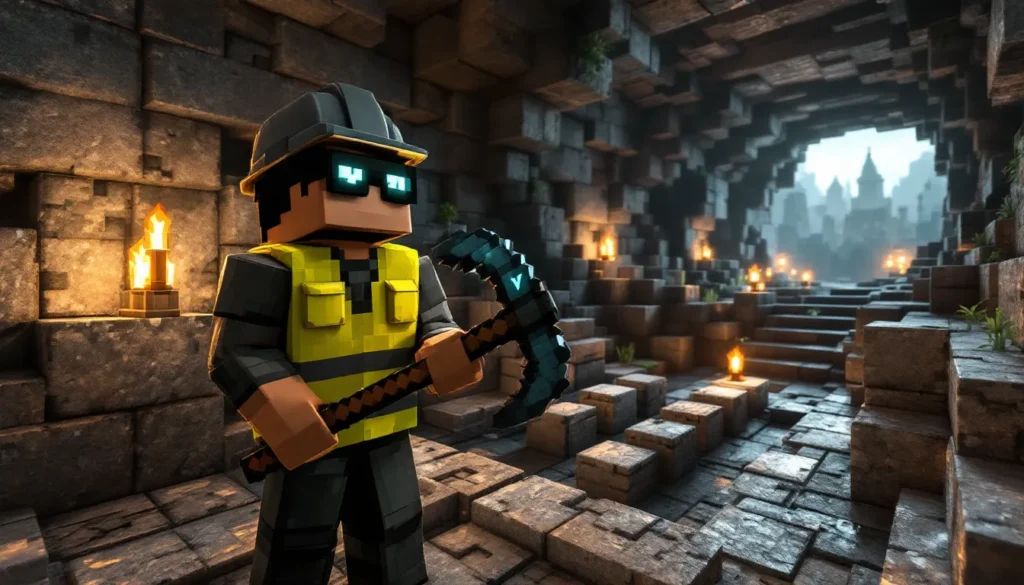
Stone is the backbone of Minecraft survival, literally. Whether you’re building your first shelter, crafting essential tools, or constructing massive architectural projects, understanding stone is non-negotiable. In 2026, stone mechanics remain largely unchanged from previous versions, but newer variants like deepslate and the evolution of building aesthetics have expanded what’s possible with this humble block. This guide covers everything: where to find it efficiently, how to mine it without wasting time, what variants exist and how to use them, and advanced techniques for builders who want to push stone’s potential. If you’re serious about progressing in Minecraft, survival or creative, you need a solid grasp of stone.
Key Takeaways
- Minecraft stone is essential for survival progression—you must gather it early to craft your first stone pickaxe and unlock iron mining.
- Branch mining at Y-level 0–16 with 3-block spacing is the most efficient technique to maximize stone collection while minimizing travel time.
- Stone variants like deepslate, stone bricks, and polished andesite offer both practical and aesthetic benefits, enabling builders to create diverse architectural styles from medieval castles to modern industrial designs.
- Enchanting an iron pickaxe with Efficiency V dramatically reduces stone mining time and is the efficiency sweet spot for mid-game and beyond.
- Combining Minecraft stone with complementary materials—wood, concrete, blackstone, and glass—creates visually compelling structures and prevents aesthetic monotony in large builds.
- Advanced builders should use subtle parity patterns, stair/slab layering, and mossy integration to add depth and visual rhythm while optimizing server performance through batch updates and texture restraint.
What Is Stone in Minecraft?
Stone is one of the most abundant solid blocks in Minecraft’s Overworld. It forms the bulk of underground terrain between Y-level 0 and Y-level 63 (pre-Caves and Cliffs update reference: current versions use expanded underground generation). When mined with a pickaxe, it drops Cobblestone, which can be smelted in a furnace to produce smooth Stone. This distinction matters: cobblestone is used for basic crafting and building, while stone serves decoration, advanced builds, and specific recipes.
Stone has a blast resistance of 6, making it moderately durable against explosions, useful knowledge for PvP servers. Its Hardness value of 1.5 means it requires a pickaxe to be harvested: any lesser tool results in no drop. In survival mode, stone mining is your first major progression gate. Early game, you’ll spend significant time gathering stone to craft your first Stone Pickaxe, which then unlocks iron mining. Without stone, you’re stuck.
The texture is gray and unobtrusive, which is exactly why builders often use stone variants for detail work. Smooth stone, stone bricks, and decorative variants all stem from this base block, making it the foundation of countless building styles from medieval to industrial aesthetics.
Where to Find Stone
Stone spawns almost everywhere underground in the Overworld, but knowing where to find it fastest is the real skill.
Underground Mining Techniques
The most reliable method is strip mining, where you dig a long horizontal tunnel at a fixed Y-level and branch off perpendicular tunnels every 3 blocks. This exposes maximum stone while minimizing travel. Aim for Y-level 0 to 16 for the densest concentration, though stone generates up to Y-level 63. Below Y-level 0, you’ll hit deepslate, which requires an iron pickaxe to harvest.
For pure speed, branch mining is optimal: dig a main tunnel, then every 3 blocks, mine branches 3 blocks high. This pattern exposes stone thoroughly while keeping mob spawning manageable. The 3-block spacing is specific, any tighter wastes time, any wider risks missing ore.
Caves are tempting but inefficient for pure stone gathering. You’ll find stone, sure, but you’ll also face mobs, falls, and disorientation. Save cave exploration for ore hunting: use mining tunnels for bulk stone collection. That said, if you’re in a cave network, grab surface stone, you can mine it with a wooden pickaxe (yes, this actually works) and it drops cobblestone instantly, no smelting needed.
Best Biomes for Stone Gathering
All biomes have stone underground, but Mountains, Caves, and Canyons expose stone at the surface more frequently, letting you gather it faster without deep mining. In surface-level stone deposits, you can rapid-mine large patches without the risk of deeper mining.
Desert and Mesa biomes have minimal underground stone because they replace it with sand and terracotta, so avoid these for stone farming. Extreme Hills (pre-1.18 generation) and modern Jagged Peaks have heavy stone generation and frequent surface exposure, solid choices if available.
Platform-wise, stone generation is identical across Java Edition, Bedrock Edition, and console versions in 2026, so your approach doesn’t change by platform.
How to Mine Stone Efficiently
Speed matters. Whether you’re building a megabase or just stocking up, wasting time on inefficient stone mining delays everything downstream.
Best Tools for Stone Mining
Your tool choice depends on your game progression:
- Wooden Pickaxe: Mines stone, drops cobblestone. No enchantments needed. Takes 1.15 seconds to break stone. Use this for your first stone gathering.
- Stone Pickaxe: Mines iron ore and stone faster (0.75 seconds). Early-game standard. Crafted from 3 stone blocks + 2 sticks.
- Iron Pickaxe: 0.4 seconds per stone block. With Efficiency V enchantment, this drops to near-instant mining. This is the efficiency sweet spot for mid-game and beyond.
- Diamond Pickaxe: Mines at the same speed as iron but lasts longer (1,562 durability vs. 250). Overkill for stone: save diamonds for obsidian, ancient debris, and ore farming.
- Netherite Pickaxe: Same as diamond but faster, with knockback resistance. Luxury tier: not worth the effort for stone alone.
Efficiency V is the game-changer. On an iron pickaxe, it reduces mining time dramatically. If you’ve got a Mending + Efficiency V iron pickaxe, you’re set for stone forever. Enchantments are found on enchanting tables (level 30+), fishing, or from raids.
Mining Methods and Strategies
Double Mining is underrated: mine a 2-block-high tunnel instead of 1-block. This doubles your harvest rate per tunnel length and only doubles your time investment linearly. For serious stone farming, this pays off.
Power Mining involves placing torches strategically as you mine, leaving a clear path so you don’t need to look back. This lets you focus on forward momentum and rhythm. Experienced miners fall into a rhythm where they’re mining faster than they’d expect.
Mob Avoidance: Light up your tunnel with torches (place them on the right wall as you walk forward: easy to follow out). Mobs won’t spawn on well-lit terrain. In 2026, this remains the simplest mob control. Darkness effect from deep dark biomes doesn’t affect artificial light, so torches work anywhere.
On multiplayer servers, consider strip mining in different directions from your base to avoid overworking one region, which can cause lag spikes from constant block updates. Spread load across the world.
If you’re on a creative server or testing, grab stone from the creative inventory, obviously faster than mining. But if survival is the goal, understand that stone gathering is an investment that pays dividends throughout your playthrough.
Stone Variants and Their Properties
Modern Minecraft stone isn’t monolithic. Multiple variants exist, each with unique properties and uses.
Deepslate and Other Variants
Deepslate is the deep-dark cousin of stone, found below Y-level 0. It takes longer to mine (0.6 seconds even with iron + Efficiency V) but is visually distinct, darker, more textured. Cobbled Deepslate is its drop equivalent. Deepslate can be mined into decorative forms: Deepslate Tiles, Deepslate Bricks, and Polished Deepslate, all useful for industrial or dungeon-themed builds.
Blackstone (from the Nether) resembles stone but has different properties. It’s not technically stone but acts similarly in recipes. It doesn’t drop anything when mined with a stone pickaxe, you need iron. Its dark aesthetic makes it valuable for modern builds.
Basalt and Magma Block are Nether variants with unique visual appeal but different mining properties. Basalt is smooth and columnar, great for clean sci-fi aesthetics. Not strictly stone, but grouped with stone-like blocks in builder vocabulary.
On Java Edition, you can distinguish variant behavior via crafting recipes. On Bedrock, some variants are simplified or absent in older versions, so check your version number before building complex deepslate structures if cross-compatibility matters.
Decorative Stone Types
Smooth Stone is crafted by smelting stone twice or smelting one cobblestone and placing the result in a blast furnace (faster). It’s completely flat, great for clean minimalist builds. No variation in texture, sterile, but useful.
Stone Bricks (crafted from stone) are Minecraft’s medieval staple. They have a clear brick pattern and multiple variants: Mossy, Cracked, and Chiseled. Mossy Stone Bricks are found in strongholds and jungle temples or crafted via vines + stone bricks. Cracked Stone Bricks are crafted by smelting stone bricks (adding wear). Chiseled Stone Bricks come from carving stone brick slabs.
Polished Andesite, Polished Diorite, and Polished Granite are decorative variants of stone-like blocks. They’re found rarely as terrain or crafted from their rough counterparts. Each has a distinct color: granite is orange/pink, diorite is white/speckled, andesite is gray. These are essential for varied palettes.
Granite, Diorite, and Andesite raw variants are stone-adjacent and generate as ore-like deposits. They’re abundant and useful for large builds where solid color matters more than brick detail. Game8’s comprehensive Minecraft guides break down block properties in detail if you want spec comparisons.
Crafting Recipes Using Stone
Stone isn’t just a building block, it’s a crafting ingredient for progression and utility.
Stone Tools and Weapons
Stone Pickaxe (3 stone + 2 sticks) is your early-game upgrade from wooden tools. Mines iron ore and coal faster (0.75 seconds vs. 1.15). Essential for survival progression. Once crafted, immediately switch to iron mining if possible.
Stone Axe (3 stone + 2 sticks, different pattern) mines wood 20% faster than wooden axes and lasts longer. Less critical than the pickaxe but useful if you’re chopping significant wood early on.
Stone Sword (2 stone + 1 stick) does 4 attack damage (same as wooden swords but lasts longer). Not worth crafting over wooden swords early, only if you have excess stone and no wood. Swords are low-priority for stone investment.
Stone Shovel, Hoe, and other tools exist but are rarely optimal. Your stone is better spent elsewhere.
Building Blocks and Furnaces
Furnaces (8 cobblestone/stone around a crafting table) are non-negotiable. You need furnaces to smelt cobblestone into stone, ore into ingots, and cook food. Early game, craft at least 4 furnaces, one for smelting ore, one for logs/charcoal, one for cooking food, one for backup.
Stone Bricks (4 stone) are the gateway to decorative building. From stone bricks, you unlock cracked, mossy, and chiseled variants, opening architectural possibilities. Serious builders always stock stone bricks.
Blast Furnace (3 smooth stone + 5 iron + furnace) is mid-game. It smelts ore in half the time. Requires smooth stone, which requires two furnace operations on cobblestone, resource investment, but worth it for large-scale ore processing.
Smoker (4 logs + furnace) is for cooking food faster. Less directly related to stone but uses furnaces you craft from stone.
Cauldrons (7 iron, but historically made with stone on old versions) aren’t directly crafted from stone in current versions, but understanding progression helps. If you’re playing on an older server, stone-based cauldrons may exist.
Platform note: Bedrock and Java use identical crafting recipes for stone items as of 2026, so your approach doesn’t differ by platform.
Stone Building Ideas and Inspiration
Stone is the most versatile building material. Its neutral gray tone, textural variants, and abundance make it suitable for nearly any aesthetic.
Architectural Styles Using Stone
Medieval Castles are the traditional use case. Stone bricks form the walls, with deepslate/blackstone for darker accents and polished stone for detail. Add crenellations (peaks along the roof line), towers, and narrow windows. The key is repetition, stone bricks on a 50×50 base look monotonous: add variety with different stone types every 5-10 blocks.
Modern/Industrial aesthetic uses smooth stone, concrete, and blackstone in clean lines. Giant walls of smooth stone with dark accents create minimalism. Pair with iron bars, chains, and dark wood for machine-like aesthetics. This style punishes imperfection, every misaligned block shows, but is stunning when executed.
Sci-Fi/Futuristic builds leverage polished deepslate, blackstone, and amethyst blocks for a tech look. Deepslate tiles have a grid pattern perfect for metallic themes. Add glowing blocks (amethyst, shriekers with sculk) for neon effects.
Natural/Cavern builds use raw stone (andesite, granite, diorite) mixed with deepslate and actual cave generation. Let terrain shape the structure rather than imposing strict geometry. This approach minimizes terraforming and feels organic.
Japanese/Zen gardens use polished stone, stone slabs, and stairs to create stepping stones and gravel paths. Combine with bamboo, water, and minimal design for tranquil spaces.
Combining Stone With Other Materials
Stone + Wood: Stone walls with dark oak or spruce frames create classic cottages. The contrast is natural and aesthetically grounded. Use wood for roofs, doors, and trim.
Stone + Concrete: Clean industrial look. Smooth stone walls with light gray concrete accents. Concrete’s bright tones pop against stone’s gray. Useful for warehouse or factory aesthetics.
Stone + Copper: Newer addition. Weathered copper (orange/green patina) against stone creates elegant builds. Copper is rare enough to use as accent, not primary, which works perfectly.
Stone + Blackstone: High-contrast dark-light combination. Use blackstone for details, stone for primary surfaces. Creates visual hierarchy and draws eyes to key features.
Stone + Glass: Transparent glass on stone creates modern elegance. Large glass panels on stone facades = contemporary architecture. Useful for bases where visibility matters.
Stone + Nether Materials: Blackstone, crimson wood, and warped wood create inter-dimensional themes. Bridge the Overworld and Nether visually through deliberate material mixing.
Resources like Nexus Mods host texture packs that recolor stone variants, letting you test aesthetics before committing builds. If you’re unsure about a color combo, try a texture pack mock-up first.
Advanced Stone Tips for Experienced Builders
Once you’ve grasped stone basics, these techniques separate casual builders from experts.
Creating Detailed Stone Patterns
Parity and Rhythm: Varied stone types arranged in patterns create visual interest without chaos. A simple rule: place 3 stone bricks, then 1 cracked, repeat. The subtle variation prevents monotony while maintaining cohesion.
Stair/Slab Layering: Stone stairs and slabs add depth. A wall of stone bricks is flat: a wall with slabs jutting out 1 block creates shadow and dimensionality. Use slabs on alternating vertical columns for effect.
Mossy Integration: Mossy stone bricks (crafted with vines) appear worn. Strategically place them to suggest age or weathering. Heavy moss = abandoned ruins. Light moss = established but maintained structures. Placement tells a story.
Multiblock Detail: Tall structures benefit from horizontal or vertical banding. Alternate stone brick types every 4-5 blocks vertically, or every row horizontally. This breaks scale and adds visual rhythm.
Textural Mixing: Polished deepslate (smooth), stone bricks (blocky), and raw andesite (rough) in proximity create texture variety. Pure smooth stone looks sterile: texture variation feels alive.
Rotation and Offset: Some players place stone bricks rotated via command blocks (in Java) or using decorative variants (official rotations) to subtly shift patterns. This micro-detail is invisible to most but registers subconsciously as more refined.
Stone Optimization for Server Performance
Batch Updates: Large stone structures cause lag if placed individually. Use single commands or tools (world edit, MCEdit) to place thousands of blocks at once. Servers handle batch updates more efficiently than sequential ones.
Avoid Excessive Variants: Deepslate tiles, chiseled bricks, and polished variants are decorative but expensive computationally if overused. Use them as accent, not bulk. A structure that’s 80% plain stone, 20% variants, performs better than alternating every block.
Reduce Redundant Blocks: Solid stone interiors don’t need full blocks if unseen. Carve out unnecessary interiors with air or use slabs to reduce entity count. Less visual benefit, better server performance.
Lighting Optimization: Torches on stone require rendering calculations. Use stripped wood, glowstone, or other light sources sparingly. Dark stone builds (deepslate) hide darkness and reduce light calculations.
Redstone Interaction: Stone isn’t redstone-reactive (doesn’t move, isn’t affected by pistons usefully), so there’s no performance penalty for using it. This is a strength, use stone for non-mechanical walls and structures confidently.
On multiplayer servers with performance constraints, inform builders that efficiency matters. A 500×500 stone base with excessive deepslate detail can cause lag. Communicate build guidelines to avoid unintended server stress. Twinfinite guides often cover optimization strategies for resource-heavy games, applicable here.
Conclusion
Stone is foundational, mechanically and aesthetically. You’ll mine it, craft with it, and build with it across every Minecraft playthrough. From your first wooden pickaxe swings to megabases using deepslate accents, understanding stone’s properties, variants, and uses accelerates progression and unlocks creative potential.
The efficiency tips here, branch mining, tool choices, batch updates, are not optional if you want to progress competitively or build seriously. The aesthetic guidelines aren’t dogma: they’re starting points. Experiment with stone combinations, invent your own patterns, and develop a signature style. The best Minecraft builders don’t follow templates: they master the fundamentals and improvise.
Whether you’re a survival player stocking furnaces or a creative builder designing sprawling cities, stone remains Minecraft’s most reliable, versatile block. Respect it, and it rewards you with possibility.
More Stories
Minecraft: The World Of Gaming Madness At ThePlayCentre — Your 2026 Guide
Inside ThePlayCentre Minecraft Archives: A 2026 Guide To Maps, Builds, And Community History
Bane Of Arthropods In Minecraft: Master The Enchantment In 2026 (ThePlayCentre Guide)