
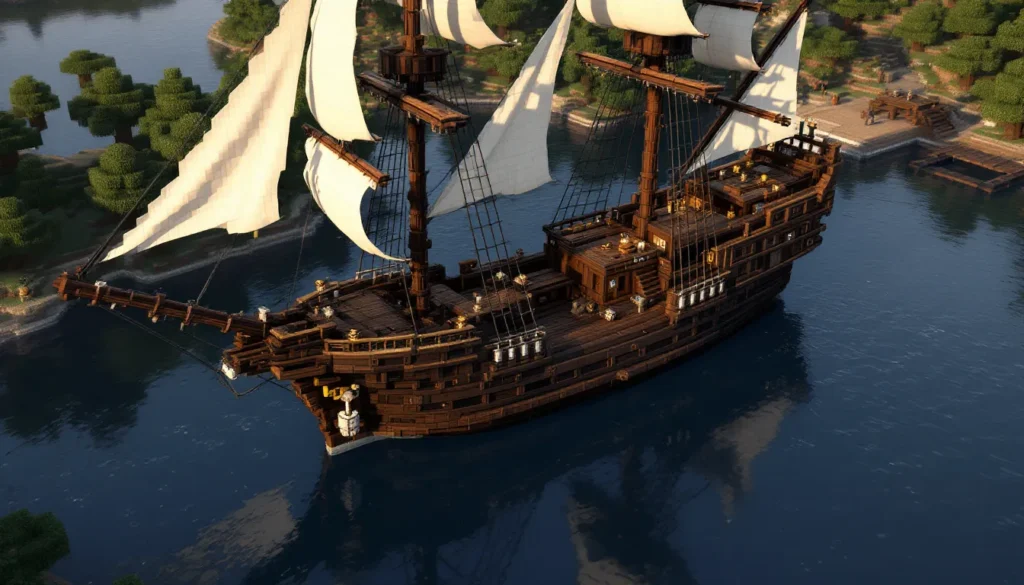
Building a ship in Minecraft is one of those projects that separates the casual players from the builders who’ve invested serious hours into mastering the craft. Whether you’re looking to create an imposing galleon that dominates your world’s skyline or a sleek modern vessel for a survival realm, a well-built Minecraft ship becomes a centerpiece, something you’ll show off and continuously improve. The key isn’t just slapping some wood together: it’s understanding proportions, materials, and design principles that make a ship feel authentic and impressive. This guide walks you through everything from material selection to advanced techniques, giving you the tools to build a ship that looks incredible regardless of your skill level.
Key Takeaways
- Building a Minecraft ship requires understanding proportions, materials, and design principles—not just placing blocks together randomly.
- Use stairs and slabs to create curved hull shapes, mix wood types for visual contrast, and keep masts proportional to your ship’s scale for authentic results.
- A well-built Minecraft ship should be at least 35–40 blocks long to maintain meaningful detail and imposing presence.
- Interior design, landscaping, and proper ship placement with docks and surrounding structures transform a good build into a showcase-worthy project.
- Avoid common mistakes like railings that are too tall, sails that look flat and stiff, and building ships in isolation without proper harbor context.
Why Ships Matter In Minecraft
Ships in Minecraft serve a purpose beyond aesthetics, though that’s certainly a major draw. They anchor a base’s theme, provide roleplay opportunities in multiplayer worlds, and challenge builders to think in three dimensions about scale and detail. A well-built ship immediately elevates the visual appeal of any spawn area or harbor zone.
In creative mode, ships are pure expression, you’re building for the sake of building something that looks fantastic. In survival mode, a ship can become a statement of progression, especially if you’ve gathered rare materials like dark oak or blackstone for the hull. Some builders even create functional ships using Redstone to open doors, move pistons, or trigger water features, blending aesthetics with mechanics.
Beyond the single-player angle, ships are central to many multiplayer server communities. Factions build naval fleets, adventure maps feature ships as landmarks, and creative servers showcase ship-building competitions. The skill required to nail the proportions and detail separates memorable structures from forgettable ones.
Essential Materials & Tools For Ship Building
Before placing a single block, you need to know what materials will work best for your vision and what tools make the building process faster and smoother.
Wood Types & Block Selection
Wood is the foundation of most Minecraft ships, and your choice defines the ship’s character. Dark Oak wood feels heavy and classic, perfect for a traditional galleon. Spruce gives a sleeker, Nordic vibe. Crimson and Warped Nether wood work for futuristic vessels or fantasy builds. Mixing wood types adds depth: a Dark Oak hull with Spruce accents, for example, creates visual contrast.
Beyond wood, wool (dyed in dark colors) works for sails. Chains and copper are excellent for rigging. Blackstone and deepslate variants add weight to the lower hull. Stairs and slabs are your best friends, they create the curved, natural hull shapes you can’t achieve with solid blocks alone. Most experienced builders keep an inventory sorted with these materials before starting.
For the waterline, solid blocks create the illusion of weight. Mixing in fences and trapdoors adds detail without breaking the silhouette. Lanterns and soul lanterns illuminate deck spaces without looking out of place.
Decorative Elements & Details
What separates a good ship from a great one is the detail work. Barrels (crafted from stair variants) look perfect on decks for storage vibes. Bells become ship bells mounted on the mast. Anchors can be created with chains and solid blocks. Banners hung from the sides add character, you can customize them with specific patterns.
Candles (especially soul candles for gothic builds) work as deck lighting. Brewing stands positioned in the galley suggest functionality. Bookshelves in a captain’s quarters add atmosphere. The trick is restraint, overstuffing spaces makes them feel cluttered. A few well-placed decorative blocks beat dozens of random items.
Choosing Your Ship Design & Style
The design you pick determines everything downstream, your material palette, proportions, and building difficulty. Pick one that excites you, because you’ll be staring at it for hours.
Galleons & Tall Ships
Galleons are the classic choice. They’re recognizable, imposing, and naturally look impressive at scale. A typical galleon design includes:
- A tall bow and stern (the front and back sections that rise higher than the midship)
- Multiple masts (usually 3+) with billowing sails
- Ornate railings and decorative railings
- A distinct quarterdeck (elevated rear section)
- Cannon ports along the hull (purely decorative, but critical for authenticity)
Galleons work best at 50+ blocks in length. Anything shorter loses the imposing quality. The hull should be roughly 8-12 blocks at its widest, tapering at the bow and stern. This is where most builders stumble, they build too small, and the proportions feel off. If you’re uncertain about scale, reference builds in the Minecraft community or existing ship designs.
Modern & Futuristic Vessels
If historical accuracy isn’t your goal, modern ships offer creative freedom. Think sleek lines, minimalist design, and unusual materials. Quartz and purpur create clean, futuristic hulls. Tinted glass panels suggest portholes or viewscreens. Copper oxidizes over time, adding patina and visual interest.
Modern designs typically favor horizontal, smooth lines over the vertical complexity of galleons. They’re often easier to build because you’re not fighting curved hulls, you’re embracing geometric simplicity. A 40-block-long modern ship can look just as impressive as a 70-block galleon because the visual impact comes from clean proportions, not scale.
Survival-Friendly Compact Ships
Not every builder has unlimited resources or patience. A compact ship (25-40 blocks long) is entirely viable, especially for survival mode. Focus on a single mast rather than three, simplify the deck layout, and use wood efficiently. A compact design proves you can nail proportions without going massive.
The advantage of survival-friendly designs is that you can actually build them in a reasonable timeframe while gathering materials. A 30-block ship with a single mast is still a showstopper if the proportions are right.
Step-By-Step Building Process
Now for the actual building. This process works for most ship designs, galleons, modern ships, and compact versions all follow the same fundamental steps.
Creating The Hull Foundation
Start by marking out your ship’s footprint. Use temporary block markers (dirt or sand) to outline the length and width of your hull. Stand back and assess proportions. The hull should taper at both ends, it’s wider in the middle, narrower at the bow and stern.
Begin laying the keel (bottom-most layer) with your primary wood type. Build up 2-3 blocks for the underwater section. Then, gradually build outward and upward, creating a curved profile. This is where stairs and slabs become essential, they let you create a smooth curve instead of a blocky, stepped appearance.
For a traditional galleon:
- Layer 1-3: Solid blocks (the keel and ballast area)
- Layer 4-6: Stairs and slabs for the hull curve
- Layer 7+: Deck level and superstructure
The hull’s thickness varies. Most builders use 3-5 blocks of thickness for the hull walls. Thinner feels fragile: thicker feels chunky. Test different thicknesses by building small sections first.
Building The Main Deck & Superstructure
Once the hull foundation is solid, plan your deck layout. Identify the bow, stern, and midship. The main deck connects these sections. For a galleon, the quarterdeck (rear elevated section) sits 3-5 blocks above the main deck, this height difference makes it visually distinct.
Create railings using fences and walls. Mix them with chains for detail. Avoid making railings too tall, 2 blocks high is standard, sometimes 1.5 using slabs. A cluttered railing makes the whole ship feel cramped.
The superstructure includes any cabins, towers, or covered sections. Keep these proportional. A cabin that’s too tall or wide throws off the entire silhouette. Roof your cabins with stairs or slabs, avoid flat roofs unless you’re building a modern ship.
Adding Masts, Sails & Rigging
Masts are the visual anchor of any ship. For a galleon, three masts are traditional, positioned at fore, center, and aft positions. Space them evenly along the ship’s length.
Masts themselves are simple: use dark oak logs or spruce logs stacked vertically. Height matters. Masts typically extend 15-30 blocks above the deck, depending on your ship’s scale. Shorter masts look weak: excessively tall ones look unbalanced. A good rule: make the mainmast (center) the tallest, with fore and aft masts slightly shorter.
For sails, use white or light gray wool stretched between masts using fences and armor stands (if you’re in creative mode). Alternatively, banners create smaller, more textured sails. Sails should billow or hang naturally, avoid perfectly flat, geometric shapes.
Rigging uses chains, tripwire hooks, and strings to suggest rope connecting masts to the deck. Keep it loose and organic, not rigid. This detail work is what separates amateur ships from impressive ones.
Interior Design & Functional Spaces
Below deck, create believable spaces. A captain’s quarters with bookshelves and a bed. A galley (kitchen) with furnaces, cauldrons, and barrels. A crew quarters with beds. A cargo hold with chests.
Even in creative mode, functional interiors make the ship feel lived-in. Use a mix of planks, stairs, and slabs for flooring variation. Add lanterns for lighting. Don’t make every interior room huge, cramped, cozy spaces feel more authentic than sprawling cabins. Remember, ships were tight, functional spaces.
Advanced Techniques & Special Effects
Once you’ve nailed the basics, advanced techniques elevate your ship into showcase territory.
Using Redstone For Moving Parts
Redstone mechanisms can create animated doors, opening gun ports, or rotating elements. A hidden piston mechanism can make cargo hold doors slide open. A series of pistons and observers can create a gate effect at the gangway.
Warning: Redstone quickly becomes complex. Start simple, a single piston door is easier to troubleshoot than a chain of mechanisms. For most builders, a few well-placed animated doors are enough. Overly complicated Redstone risks lagging your world.
Water Features & Splash Effects
Water around the ship’s base sells the maritime vibe. Use flowing water in channels around the dock area. For dynamic effects, create a small waterfall off the stern, it suggests the ship’s wake. Use soul fire and campfires along the railings for evening ambiance.
For advanced effects, controlled water physics using signs and stairs can create the illusion of the ship sitting in water without actually placing the water blocks (which would damage the build aesthetically). This technique takes practice but looks incredible.
Bringing Your Ship To Life: Landscaping & Placement
A finished ship placed on flat grass looks abandoned. Context transforms it.
Create a harbor foundation using stone, deepslate, and wood planks to suggest a dock. Build a dock structure extending from shore, wooden docks use spruce or dark oak planks. Add chain, iron bars, and rings (using item frames) to suggest mooring points.
Landscape around the ship. If it’s coastal, add beach terrain with sand and gravel. Plant oak trees and spruce trees nearby for a forested harbor. Use lanterns and torches on dock posts. Add barrels and crates (crafted from stairs) scattered on the dock to suggest cargo.
Water management is critical. If your ship’s in an artificial harbor, terrace the ground smoothly to the water level. Uneven banks look sloppy. For survival worlds, finding a natural cove or river to build your ship in saves enormous terraforming work.
Consider the time of day your ship looks best. Some builds shine at sunset (use orange dye for dyed concrete nearby). Others look better at night (lanterns become dramatic). Place your ship where it’ll be frequently visible, don’t hide a masterpiece in a remote corner.
Common Mistakes To Avoid
Ship building has predictable pitfalls. Knowing them saves hours of frustration.
Building too small. A 20-block ship looks cramped and loses detail impact. Aim for at least 35-40 blocks for meaningful complexity. Compact designs work, but they require refined proportions, harder, not easier.
Proportions feeling off. This stems from bow and stern being too small relative to the hull’s body. The bow should rise noticeably (5+ blocks above the main deck). The stern quarterdeck should be elevated and prominent. If your ship looks flat, it’s probably under-emphasized at the ends.
Railings too tall or too detailed. Railings should be minimal, not ornate fences everywhere. A simple fence in a single material looks clean. Railings over 2.5 blocks tall make the deck feel enclosed and cramped.
Masts looking spindly. A single log looks weak. Use logs with fences adjacent to thicken the visual presence. Masts should feel like they could support sails and rigging, not look like toothpicks.
Sails looking flat and stiff. Sails should be slightly curved or irregular, never perfectly rectangular. Use stairs, slabs, and irregular fence placement to suggest billowing fabric.
Ignoring interior design. A ship with detailed exterior but empty interior feels hollow. Spend 10-15% of your building time on interiors, it pays off.
Placing the ship in isolation. A beautiful ship floating in a void of empty terrain looks out of context. Docks, landscaping, and surrounding structures matter enormously. Players building in servers or creative maps notice this immediately, it’s what separates decent builds from showcase-worthy ones.
Inspiration & Community Resources
Stuck on design ideas? The Minecraft building community is massive and supportive. Nexus Mods hosts mods that add ship-themed blocks and decorations if you want to expand your material palette beyond vanilla blocks. For comprehensive build guides and design principles, resources like Game8 compile popular ship builds and techniques in ranked guides.
YouTube is invaluable. Search “Minecraft ship tutorial” and watch how experienced builders approach the problem. Focus on how they handle proportions and detail, not just copying their exact design. The goal is understanding principles, not replication.
Servers like Hermitcraft showcase incredible ships. Watch builders like BdoubleO100 construct massive naval fleets, notice how they handle scale, proportion, and landscaping. Reddit communities (r/Minecraft, r/Minecraft_Blueprints) feature ships constantly. Engage with the community, share your progress, and ask specific questions. Builders love critiquing WIPs and offering advice.
For PC gamers interested in experimental building, custom mods add new blocks and mechanics. Rock Paper Shotgun reviews building-focused mods and texture packs that enhance ship aesthetics. Most vanilla Minecraft purists will scoff at this, but mods open creative possibilities that base game limits.
Conclusion
Building a Minecraft ship isn’t just placing blocks randomly, it’s understanding proportion, material choice, and spatial design. Start with a design that excites you, whether that’s a towering galleon or a sleek modern vessel. Build the hull foundation carefully, nail the deck and superstructure, then add masts and rigging. Details like railings, decorative blocks, and interior spaces elevate the final product from decent to impressive.
The process takes time, but that’s part of the appeal. A finished ship becomes a landmark in your world, something you’ll continuously tweak and admire. Each ship you build teaches lessons that carry into the next project. Your first ship might feel rough, but by your third or fourth, proportions become intuitive and quality skyrockets.
Don’t get discouraged by ambitious projects or mistakes. Every builder has torn down half-finished ships and started over. That’s not failure, that’s part of the craft. Grab the materials, place the first blocks, and let the process unfold. Your epic ship is waiting.
More Stories
Mastering Command Blocks In Minecraft: The Complete 2026 Guide
How Does Mending Work in Minecraft? A Complete Guide to Repairing Your Gear in 2026
How To Build The Ultimate Mob Farm In Minecraft: Complete Guide For 2026