
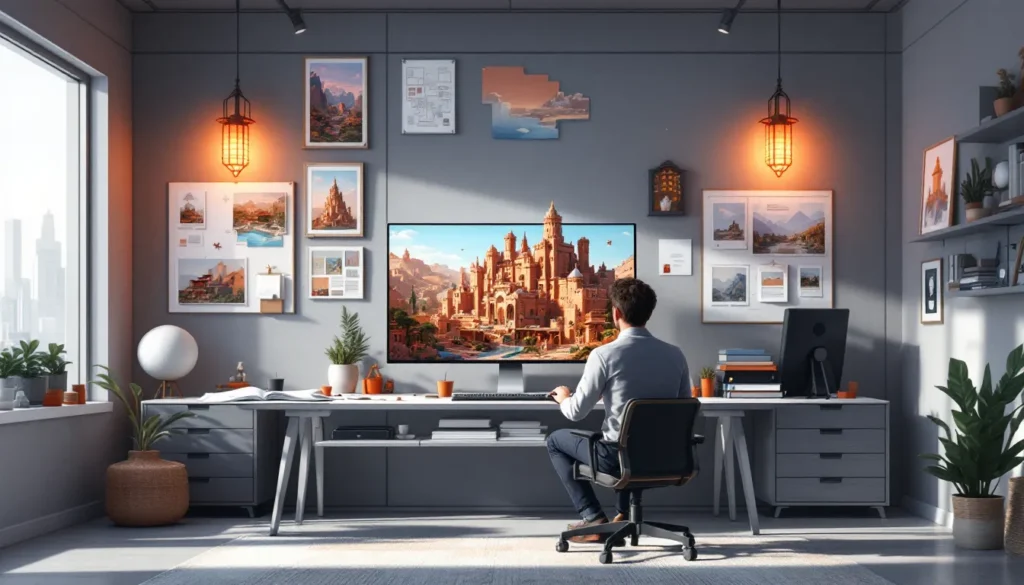
Minecraft has evolved far beyond simple block-stacking. In 2026, the game’s creative depth rivals any serious design tool, and builders who understand the nuances of crafting and design can turn raw materials into architectural masterpieces. Whether you’re designing your first base or refining techniques for competition-ready builds, mastering crafty Minecraft isn’t just about knowing recipes, it’s about understanding the principles that separate amateur structures from jaw-dropping creations. This guide walks you through the mechanics, strategies, and proven approaches that professional builders use to create worlds worth exploring.
Key Takeaways
- Crafty Minecraft combines intentional design with survival mechanics, transforming basic block-stacking into architectural projects that prioritize both function and aesthetics.
- Master essential crafting mechanics like recipe patterns, inventory management, and strategic enchantments—Efficiency V, Unbreaking III, and Silk Touch—to dramatically increase building efficiency and material availability.
- Apply color theory and block textures strategically: use analogous colors for cohesive designs, complementary colors for visual drama, and leverage texture variations to add depth without complexity.
- Create architectural depth through layered design, negative space, and purposeful lighting that transforms flat surfaces into visually interesting structures that feel lived-in and intentional.
- Optimize your workflow by organizing storage systems by material type, maintaining multiple specialized tools, and using shulker boxes to maintain building momentum without constant trips back to base.
- Elevate ambitious projects like themed landscapes and collaborative builds by studying real-world architecture, adding narrative details, and sharing your creations with the community for feedback and inspiration.
What Is Crafty Minecraft and Why It Matters
Crafty Minecraft represents the intersection of survival mechanics and creative ambition, it’s the philosophy of intentional, thoughtful building within Minecraft’s constraints. Rather than slapping blocks together, crafty builders approach each project with a clear vision, understanding how to optimize their resources, select appropriate materials, and execute designs that function both aesthetically and practically.
Why does this matter? Because casual building gets stale fast. Once you’ve thrown up a basic shelter, the real challenge becomes: how do you build something that’s both functional and beautiful? Crafty Minecraft builders tackle this by applying real design principles to their work. They think about balance, proportion, lighting, and narrative. A crafty base doesn’t just keep mobs out, it tells a story. A crafty castle doesn’t just look impressive from a distance: it holds up under scrutiny, with believable architectural details and purposeful design choices.
In competitive Minecraft communities and creative servers, the difference between a standard build and a crafty one is immediately obvious. Players recognize quality faster than you’d expect, and building with intentionality elevates your reputation and enjoyment of the game. Whether you’re grinding on a survival server or creating for an audience, developing crafty skills transforms how you approach every project.
Essential Crafting Mechanics Every Builder Should Know
Understanding the Crafting Grid and Recipes
The crafting table is your foundation. Most players know the basics, sticks and planks make torches, iron ingots plus cobblestone make furnaces, but there’s more strategic depth here than many realize.
The 3×3 crafting grid isn’t arbitrary. Recipes respect symmetry and logic: stairs are crafted diagonally because visually they represent a slope, slabs are arranged in a bottom row because they’re literally half-blocks. Understanding this pattern recognition helps you intuit recipes even for obscure items. When you’re building something complex and need a specific component, you can often reason out the recipe instead of checking a wiki.
For crafty builders, inventory management during crafting is crucial. Raw materials convert into tools, decorative blocks, and functional components at different rates. A crafty approach means preparing your material stockpiles before you start building. If you’re designing an elaborate interior with dark oak furniture, you don’t want to stop mid-project hunting for more logs. Pre-crafting and pre-organizing your inventory prevents the friction that kills creative momentum.
Unlocking Advanced Crafting Through Enchantments
Enchantments transform basic tools into specialized builders’ equipment. Efficiency V on a diamond pickaxe isn’t just faster harvesting, it’s the difference between gathering materials in 30 minutes or spending an hour. For crafty builders on survival servers, this efficiency directly impacts how much time you can dedicate to actual building versus grinding.
Unbreaking III extends tool lifespan dramatically, reducing the frequency of tool replacement and keeping you focused on work rather than maintenance. Silk Touch is where things get interesting: it lets you harvest blocks like glass, ice, and leaves intact, opening up building possibilities that basic survival restricts. You can grab glass without needing to smelt sand, or harvest leaves to use as decorative elements instead of burning them away.
On the creative side, Mending combined with an XP farm means you never need to replace your primary tools. Pair this with Sharpness or Knockback enchantments on weapons, and your quality-of-life improves significantly when you’re gathering materials in dangerous territory. Advanced crafty players prioritize enchanting early because the time investment pays dividends across every subsequent project.
Creative Building Strategies for Impressive Projects
Color Theory and Block Palette Selection
This is where many builders plateau. They know how to place blocks but don’t grasp why certain color combinations work while others clash.
Color theory in Minecraft is surprisingly relevant. Analogous colors, blocks adjacent on the color wheel like terracotta variants in orange, red, and brown, create cohesive, warm buildings. Think desert mansions or clay structures: they feel organic because the colors transition naturally. Complementary colors, opposites like blues and oranges, create visual pop and drama. A blue roofed structure against orange sand immediately draws the eye.
But here’s the crafty twist: Minecraft’s block textures aren’t flat. Deepslate variants have roughness and texture that reads differently than smooth stone. Copper oxidizes over time, shifting color gradually. Wood types have distinct grain patterns. Crafty builders leverage these textures to add visual interest without adding complexity. A wall of uniform oak planks is boring. The same wall with occasional spruce logs, stripped logs, and log variants becomes textured and intentional.
Consider your build’s context too. A modern base in a plains biome benefits from lighter, cleaner blocks, white concrete, light gray wool, smooth stone. The same design in a taiga looks out of place. Crafty builders respect biome identity and choose palettes that feel native to their environment, even when pushing stylistic boundaries.
Incorporating Architectural Details and Depth
This is what separates “that’s a nice base” from “wait, I need to explore that base for twenty minutes.” Depth comes from layering.
Start with your primary structure, the main walls and roofline. That’s your silhouette. Then add a secondary layer, perhaps walls that jut out slightly, or an overhang that casts shadows. Then a tertiary layer, window frames, decorative trim, small details that break up flat surfaces. Each layer doesn’t need to be thick: sometimes a single block indent is enough to catch light and create visual interest.
Negative space matters as much as positive. A completely filled wall feels heavy and cheap. Strategic gaps, intentional windows, alcoves, open passages, let light interact with your structure and make it feel deliberately designed rather than hastily assembled. Crafty builders study real architecture for inspiration: how do actual buildings handle repetition? Usually through careful variation and strategic void.
Lighting becomes a design tool when you think about depth. Lanterns hung from overhangs cast directional light and create shadow patterns. Glowstone hidden inside walls gives subtle ambient glow. Candles in windows suggest life inside. Strategic light placement makes buildings feel inhabited and guides player attention to architectural details you’re proud of.
Using Terrain and Landscaping to Your Advantage
No build exists in isolation. The best crafty projects integrate with their environment rather than fighting it.
Terrain work is tedious, but it’s non-negotiable for elite builds. If your castle sits on flat grassland, it looks awkward and unfinished. Raising the foundation on a small hill, adding gentle slopes that transition into the landscape, and terrace-sculpting around the base makes the build feel anchored. The structure doesn’t seem placed on the world, it seems part of it.
Landscaping also means vegetation. Strategic tree placement frames buildings. Paths created with gravel, dirt, or log varieties guide visitors and define spatial hierarchy. A small garden near an entrance suggests intentionality and care. Landscaping is where patience pays off: small details accumulated create immersion. From Blocks to Biomes: explores how the game’s biome systems have shaped community creativity, and understanding biome identity makes landscaping feel authentic.
Water and elevation changes are your strongest landscaping tools. A moat isn’t just practical, it’s dramatic. A river running through your build’s center breaks monotony. Elevation changes from terrain sculpting create natural focal points. Crafty builders spend as much time on landscaping as the structure itself because that’s the difference between a castle and a castle that belongs.
Tool Selection and Crafting Optimizations
Choosing the Right Tools for Efficient Harvesting
Not all tools are created equal, and crafty builders optimize their tools for specific harvesting tasks.
A diamond pickaxe is your baseline for serious work. It mines stone, ores, and most building blocks efficiently. But upgrade to netherite if you’re playing a long-term survival world, the durability difference is real, and the extra speed compounds across hours of building. The mining speed increase means you gather materials 30% faster than with diamond, directly translating to more building time.
But pickaxes aren’t one-size-fits-all. For wood harvesting, an axe mines logs faster than a pickaxe, and the speed difference matters when you’re gathering dozens of stacks. A diamond axe with Efficiency V drops logs faster than most people expect. Similarly, a shovel beats any other tool for dirt, sand, and gravel, use the right tool for the block type, and your farming efficiency skyrockets.
Hoes are overlooked. They till soil instantly and harvest crops quickly. If you’re integrating farms into your base design, a quality hoe saves seconds per harvest that compound into minutes per session. Combine it with a nearby water source and a designated farming area, and resource gathering becomes seamless rather than tedious.
The crafty optimization: maintain multiple tools. Keep a netherite pickaxe for stone and ore, a diamond axe for wood, a diamond shovel for soil materials, and a hoe for crops. Sound excessive? It’s not. Swapping tools during work costs seconds, but having the right tool available means you’re always operating at peak efficiency. Minecraft Automatic Farms: Your Guide to Effortless Crop Production details how automation can further optimize resource gathering, but even automated setups benefit from efficient harvesting of initial materials.
Organizing Your Inventory and Storage Systems
A disorganized inventory is an invisible brake on productivity. You’re hunting for items, second-guessing what you need, and losing focus on the actual building work.
Crafty builders use a consistent storage system architecture. Create a central hub area where all items funnel. Organize chests by material type: one section for wood variants, one for stone variants, one for decorative blocks, one for utility blocks, one for tools and armor. Within each category, arrange items logically, all wood planks together, all stone variants together. Consistency matters more than the specific system: you want muscle memory to kick in.
A double chest for each material category is a practical starting point. Arrange them in rows with clear labeling (signs above each chest). As your collection grows, expand systematically. Some crafty builders use a warehouse setup with color-coded areas and item sorters that automatically direct items to their correct chest.
Inventory management during active building is equally important. When you’re mid-project, carry only what you need for that specific phase. If you’re building walls, grab stacks of your primary block, secondary block, and accent blocks, leave the wood and utility blocks at base. This keeps your inventory clean and prevents the “scroll through 27 slots to find what I need” friction.
Use shulker boxes strategically. They’re portable 27-block-equivalent containers. Keep one with you during major projects containing your essential tools and a few stacks of primary materials. When it fills, swap it out without returning to base. This workflow keeps you building instead of commuting.
Project Ideas to Elevate Your Crafty Minecraft Experience
Building Your Dream Base or Castle
A functional, beautiful base is the ultimate crafty project. It combines survival necessities, storage, crafting areas, furnaces, with intentional design that makes spending time there enjoyable.
Start with the foundation and footprint. Decide: are you going for a compact, efficient base or something sprawling and scenic? Compact bases work on multiplayer servers where you’re protecting a territory. Sprawling bases work in single-player where you have space and want to create an immersive space. Sketch your layout before placing blocks. Designate zones: the entrance area, the storage hub, the crafting area, the living quarters, and industrial areas (furnaces, XP farm, etc.) separate from living space. Vertical separation helps, put noisy redstone contraptions in a basement, create a peaceful bedroom area floors above.
For castles specifically, study real medieval architecture. The best Minecraft castles respect structural logic, corner towers for defense make sense, towers actually rise from the ground rather than floating, walls have gates and portcullises that could theoretically function. This architectural honesty makes castles feel believable and impressive.
Add narrative details that transform a castle into a story. A throne room in the central tower. A library with bookshelves and reading areas. Barracks for soldiers. A marketplace in the courtyard. The more specific the details, the more compelling the build. It stops being “I built a castle” and becomes “I built this castle with these characteristics.”
Designing Custom Furniture and Interior Decoration
Interiors separate elite builds from good ones. A fortress is impressive. A fortress where you want to live because the interior is thoughtfully designed is transcendent.
Minecraft’s furniture options are more extensive than many realize. Stairs and slabs become seating when placed at angles. Fences and gates become railings. Trapdoors become shutters and decorative wall panels. Lecterns and bookshelves create study nooks. Brewing stands and cauldrons suggest alchemy or potion-crafting areas. Smart placement of these utilitarian blocks creates functional furniture that reads as intentional decoration.
Carpet and rugs define spaces. A rug under a bed grounds it. Carpet pathways guide movement through large rooms. Color-coordinated carpets in different rooms create visual flow. Small rugs in corners create cozy nooks. Layering different carpet colors creates rug patterns that feel deliberate.
Lighting inside is crucial. Lanterns on walls feel warmer than torches. Chandeliers made from chains and glowstone drop from ceilings in fancy rooms. Sconces (torches or lanterns on side walls) provide ambient light. Candles in windows suggest cozy inhabitants. Layer your lighting, bright functional light for work areas, softer decorative light for living spaces. The difference in atmosphere is dramatic.
Creating Themed Landscapes and Biome Projects
Themed landscapes transcend single structures and create immersive worlds. They’re ambitious, but they’re also projects that evolve over weeks or months, providing constant creative direction.
Choose a theme that excites you: a Japanese garden, a Mediterranean village, a desert city, a underwater base, a sky realm. The theme constrains your choices in productive ways. A Mediterranean village requires specific architecture, color palettes, and landscape features. These constraints actually make the creative work easier because you’re not staring at a blank slate, you’re working within a framework.
Start with terrain. Sculpt the landscape to support your theme. A village needs gentle slopes and open areas. A mountain retreat needs dramatic elevation changes. A jungle temple needs lush, dense vegetation. Spend time on terrain before building major structures: it’s the foundation that makes everything else feel right.
Then layer structures and vegetation. A Japanese garden isn’t just landscaping, it’s carefully placed pavilions, bridges, rock arrangements, and water features in precise harmony. A village isn’t just houses: it’s houses, shops, gardens, wells, and gathering spaces that suggest a functioning community. The density of small details creates immersion.
Minecraft White Blocks: The Ultimate Guide to Building with Style provides specific guidance on color-coordinated building, which is invaluable when creating themed landscapes where material consistency communicates theme and intentionality. A Mediterranean village uses predominantly warm terracotta and sandy blocks. A snow biome base uses whites, light grays, and icy blocks. Material coherence strengthens thematic identity.
Advanced Tips for Technical and Creative Excellence
Using Redstone for Functional and Visual Effects
Redstone is where crafty building intersects with technical engineering. Most players see redstone as purely functional, doors, farms, piston sorters. But crafty builders leverage it for visual storytelling too.
Piston contraptions aren’t just game mechanics: they’re moving set pieces. A castle drawbridge actually lowers. A secret entrance slides open. A stage floor rises for performances. These mechanical elements transform static builds into living structures that feel interactive.
Redstone lamps glow when powered, creating lighting that responds to the environment. Imagine a house where lamps glow at sunset (using a daylight sensor) or a fortress that lights up when hostile mobs approach. These systems add immersion and technical impressiveness simultaneously.
Visual redstone displays are underrated. Redstone torches can be hidden and used strategically to power lighting that appears intentional. Observers detect block changes and trigger effects. You can create rooms that illuminate as players enter, or designs that respond to player interaction. The crafty application: use redstone subtly to enhance atmosphere without making the mechanics obvious.
How To Hack Minecraft: Unleash Your Inner Pixel Wizard explores advanced modifications and mechanics that can extend what’s possible, but vanilla redstone is incredibly powerful when creatively applied. A drawbridge that actually functions is more impressive than a static castle gate, and it’s achievable with vanilla mechanics.
Most sophisticated builds hide complexity. A room that seems simply decorated but actually has hidden redstone lighting, hidden doors, and interactive elements reads as impressive and thoughtful. The best redstone applications are invisible to casual observers but obvious to players who understand the mechanics.
Collaborating with Other Players and Sharing Creations
Many crafty builders isolate themselves, but collaboration elevates projects exponentially. Building with others, whether on multiplayer servers or by sharing ideas, pushes everyone toward higher standards.
Multiplayer collaboration on servers like (Craftee) or community-focused realms creates accountability and inspiration. When you’re building alongside others, you naturally push your own standards higher. Seeing teammates achieve impressive designs motivates iteration and improvement on your own work.
Sharing your work amplifies the feedback loop. Post your builds to Reddit communities, Discord servers, or even YouTube if you’re comfortable. Specific critique, “your roofline feels flat, try adding more overhang variation”, is invaluable. General praise is nice, but constructive feedback accelerates improvement.
Participation in building challenges (themed contests, speed builds, collaborative builds) keeps you sharp. These challenges force you outside your comfort zone. If you always build castles, a challenge to create an underwater base introduces new problem-solving and expands your skillset.
Learning from others is equally important. Study acclaimed builds. What makes them work? How did the builder handle spatial flow? What color combinations did they choose? Analysis of others’ work develops your eye for design, which directly improves your own output.
6 Games Minecraft Fans Will Love highlights why Minecraft’s creative community is so strong, it’s the same collaborative, creative spirit that makes shared building experiences so rewarding. Whether you’re on a friend’s server or watching streamers create, the community aspect of crafty building is fundamental to long-term engagement and improvement.
The meta shift in recent years is toward shared world building rather than isolated single-player creation. Multiplayer servers, community realms, and collaborative events emphasize that building is more rewarding when others witness and appreciate your work. This perspective transforms crafty Minecraft from a solitary hobby into a social experience.
Conclusion
Crafty Minecraft is a discipline, not just a playstyle. It requires understanding crafting mechanics and design principles, optimizing your workflow, and maintaining the discipline to iterate rather than accept first attempts. The builders creating jaw-dropping structures in 2026 aren’t necessarily the ones with the most playtime: they’re the ones who approach building systematically and thoughtfully.
The path forward is straightforward: master the mechanics (crafting, tools, organization), understand the principles (color, depth, balance), and practice relentlessly on projects that excite you. Start with a functional base that respects good design. Move toward more ambitious projects, castles, themed landscapes, collaborative builds. Each project teaches lessons that improve the next one.
Minecraft’s creative ceiling is higher than most games. The difference between adequate and extraordinary builds isn’t special items or mods, it’s intentionality and craft. You have everything you need right now to create something impressive. The only ingredient is consistent practice toward improvement.
Start building. Study what works. Iterate. Share your creations. Learn from others. That’s the crafty Minecraft journey, and it’s one of gaming’s most rewarding experiences.
More Stories
Mastering Command Blocks In Minecraft: The Complete 2026 Guide
How Does Mending Work in Minecraft? A Complete Guide to Repairing Your Gear in 2026
How To Build The Ultimate Mob Farm In Minecraft: Complete Guide For 2026