
Kids play hard, and bumps and bruises are expected. But what happens when a minor tumble turns into a real medical emergency? Discover the essential emergency skills parents and caregivers need to confidently handle unexpected accidents and keep children safe during active playtime.
Kids running, jumping, and laughing at the local indoor play center is a beautiful sight. We want them to burn off that endless energy. But let’s be realistic for a second. When you mix high speeds, climbing structures, and excited toddlers, accidents are bound to happen.
Sometimes, it’s just a simple scraped knee. Other times, it’s a sudden, terrifying choking incident from a rogue piece of hard candy. When panic suddenly sets in, do you actually know what to do next? Enrolling in First Aid Training is the best way to turn that paralyzing fear into confident action. It equips everyday parents and caregivers with the exact, practical skills to protect kids when things go wrong.
What Are the Most Common Play Area Injuries?
Indoor play centers and outdoor parks come with unique risks for young kids. Slips and falls are by far the most frequent culprits. A bad landing off a slide or a trip over a foam block can easily cause a sprained wrist or a deep cut.
You also have to watch out for unseen hazards. An unexpected allergic reaction to a snack shared by a new friend can cause a child’s airway to swell shut in minutes. Kids can also suffer from heat exhaustion if they are running around a warm room for hours without a water break. Recognizing these physical signs early is half the battle when it comes to keeping them safe.
Why Can’t We Just Wait for the Ambulance?
When an emergency happens, your first instinct is to dial 911 and step back. That is exactly what you should do first. But paramedics cannot teleport to your location. Traffic and confusing recreation center layouts will always delay them.
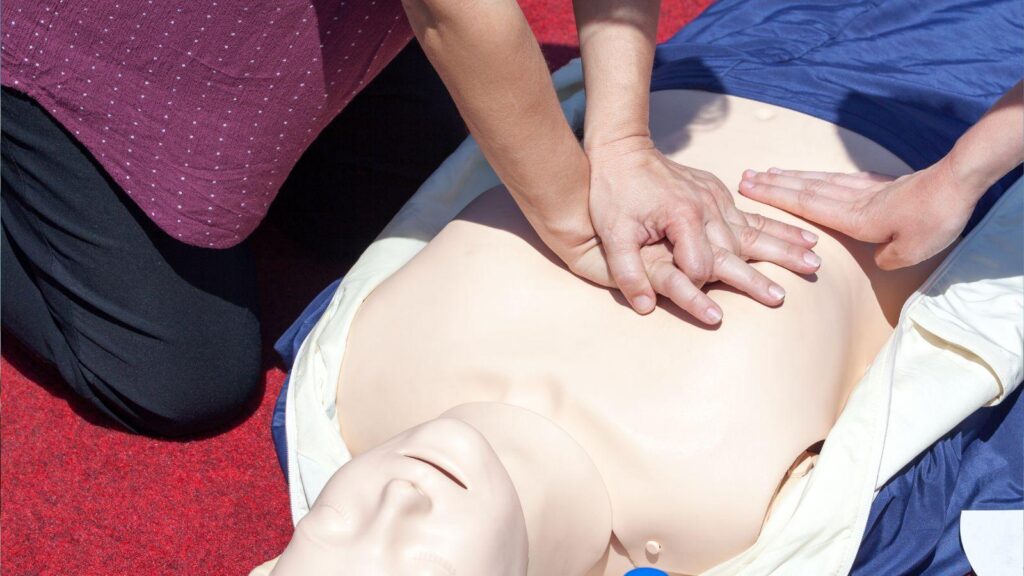
If a child stops breathing, brain damage starts in as little as four minutes. You simply can’t afford to just stand there. By performing chest compressions or applying firm pressure to a severe wound, you keep them stable until professional help arrives. You become the vital bridge between the accident happening and the medical professionals taking over.
How Does Blended Learning Work for Busy Parents?
Finding a whole weekend to sit in a stuffy classroom is tough. Who wants to give up their Saturday when they could be at the park with the kids? Thankfully, the way we get certified has adapted to our chaotic family lives.
A Blended Learning format is incredibly convenient. You finish the theoretical reading modules online from your couch after the kids finally go to sleep. Then, you just drop by a local training facility for a short, hands-on session. You get to practice compressions and choking techniques on infant and child mannequins under expert guidance. It’s fast, practical, and ensures your muscle memory is ready for the real world.
If you are looking for first aid training near the Nipissing Road commercial district, the busy Thompson Road South and Main Street East intersection, or other areas close to our facility, then you may reach out to Coast2Coast First Aid/CPR – Milton in that area. For more info and articles like this visit: https://www.c2cfirstaidaquatics.com/
Frequently Asked Questions
Is CPR different for toddlers and adults? Yes. Adult CPR requires deep, two-handed chest compressions. For toddlers and infants, you must use modified hand placement and much less physical force to avoid injuring their delicate ribs.
What should I pack in a diaper bag first aid kit? Keep it simple but effective. Pack varied sizes of bandages, antiseptic wipes, sterile gauze pads, a small instant cold pack, and tweezers for splinters. Always carry an EpiPen if your child has known allergies.
Will taking a safety class teach me how to use an EpiPen? Absolutely. A comprehensive safety course covers how to recognize the physical signs of severe anaphylaxis and how to safely administer an auto-injector to a child in distress.
How long does my safety certification stay valid? Standard first aid and CPR certifications typically last for three years. However, taking a brief refresher course every single year is a smart way to maintain your muscle memory and stay updated on medical guidelines.
Are these courses officially approved for professional childcare workers? Yes, our courses are fully WSIB/OHS approved. They meet the strict national safety standards required for daycare providers, school teachers, and professional caregivers across the province.
More Stories
Level Faster In WoW Classic: ThePlayCentre’s Best Leveling Addons And How To Use Them (2026)
ThePlayCentre.org: The Parent’s Guide To Play, Parties, And Classes (2026)
The-Playcentre.org Reviewed: A Practical Guide To Play Spaces, Programs, And Resources In 2026